Navi Mumbai Property Investment Guide 2026: Best Areas, Prices & Airport Impact

Last updated in March 2026. Navi Mumbai real estate has moved into a different phase now that the airport corridor is shifting from promise to active demand. With Navi Mumbai International Airport live, Atal Setu shortening access from Mumbai, and Metro Line 1 supporting internal movement, buyers are comparing Kharghar, Ulwe, Panvel, and Taloja with much sharper expectations than they did two years ago.

Why 2026 is the first serious airport-economy year

The biggest change is that buyers are no longer underwriting only future infrastructure. They are now pricing actual utility: airport-linked jobs, business travel convenience, faster regional access, and a wider renter pool that can justify higher absorption across multiple nodes.

That does not mean every airport-belt location deserves a premium. It means the gap between strong micro-markets and purely speculative ones is getting clearer. The winners are the locations that combine connectivity with day-to-day livability.

  • NMIA has shifted the corridor from long-term story to active market trigger.
  • Atal Setu has made Navi Mumbai more realistic for professionals who still need Mumbai access.
  • Metro-linked movement continues to improve the case for Kharghar, Taloja, and the wider growth belt.

Navi Mumbai property rates 2026: the quick area read

Serious buyers in 2026 are not asking only whether Navi Mumbai is rising. They are asking which node is rising for the right reasons. The answer changes by buyer type. Ulwe is still a direct airport story. Kharghar is still the most balanced end-use-plus-investment play. Panvel remains one of the largest long-view growth conversations. Taloja still works for lower-entry buyers who can wait. Established nodes like Nerul and Belapur remain relevant because rental depth and resale confidence are harder to replace than hype.

  • Ulwe is still one of the most tracked airport micro-markets because direct airport relevance keeps both investors and rental-yield buyers interested, but entry pricing is no longer early-cycle cheap.
  • Kharghar remains the most balanced all-rounder for buyers who want schools, retail depth, metro relevance, and a locality that already works as a home instead of only as a thesis.
  • Panvel continues to benefit from scale, highway access, township-style inventory, and strong long-horizon conviction tied to the airport ecosystem and regional mobility.
  • Taloja remains one of the most affordable metro-influenced plays for buyers who want lower entry pricing and can accept a more developing daily-life environment.
  • Nerul, Vashi, and CBD Belapur stay premium because they offer deeper rental demand, stronger liquidity, and more mature urban living than outer growth nodes.

MTHL impact on property prices in Navi Mumbai

Atal Setu matters because it changed search behaviour as much as commute time. Once South Mumbai and business-district professionals started seeing Navi Mumbai as more accessible, the buyer pool widened. That matters for both rental demand and exit liquidity.

The strongest impact has not been uniform price inflation everywhere. It has been a more selective premium for places that combine access with usable daily life. That is why better-connected, more livable nodes still outperform locations that only sound close on a map.

  • Travel-time compression makes Navi Mumbai more realistic for Mumbai-linked professionals.
  • Buyer quality improves when commuting becomes practical, not just theoretically possible.
  • Nodes with both access and livability tend to hold pricing power better than purely speculative corridors.

What is still pushing prices higher

One reason buyers remain bullish is that market pricing in several pockets now sits meaningfully above government guidance values. When quoted and transacted prices keep outrunning ready reckoner values, buyers read that gap as a sign of continued formal catch-up over time.

The second reason is job creation around the airport and its future commercial ecosystem. Airport-adjacent growth is rarely a one-quarter story. The stronger wave usually comes when aviation activity, logistics, hospitality, and office demand start feeding housing demand together.

  • Ready reckoner values still lag actual market sentiment in multiple micro-markets.
  • Under-construction purchases still need careful budgeting for GST, duty, registration, parking, and floor-rise premiums.
  • Airport-linked commercial growth can create a second demand wave after the first pricing excitement settles.

Best area to invest in Navi Mumbai depends on who you are

  • End users and families usually do best in Kharghar or Belapur because daily life is easier, social infrastructure is stronger, and resale confidence is cleaner.
  • First-time investors often enter through Taloja or outer Panvel because the ticket size is lower and the appreciation runway can still feel meaningful.
  • NRI buyers typically prefer Kharghar, Nerul, or airport-influenced corridors with stronger tenant appeal and lower explainability risk at exit.
  • Rental-yield buyers keep tracking Ulwe, Belapur, Airoli, and Ghansoli because employment-linked demand matters more than pure brochure excitement.

Airport, metro, and ready reckoner: the three forces to compare together

A lot of buyers overweight one catalyst and underweight the others. Airport relevance can improve the long-term demand case. Metro access can improve actual daily use. Ready reckoner gaps can affect costs and also signal where the formal value framework is lagging market behaviour.

The right investment decision usually comes from reading all three together. If the airport story is strong but the daily-use case is weak, the investment becomes narrower. If the metro case is strong but the pricing is already stretched, the upside may be thinner. If the ready reckoner gap is large, the transaction needs cleaner cost planning.

Red flags buyers should not ignore

  • Treat every airport claim as a micro-location question, not a blanket locality guarantee.
  • Check MahaRERA timelines, quarterly updates, and the registered completion date before paying even a token amount.
  • Do not compare only base price. Compare all-in acquisition cost, including taxes, charges, deposits, and floor premiums.
  • Avoid assuming that a low quoted resale price is automatically a bargain if the ready reckoner gap creates tax or duty complications.
Edit Related Properties

Projects worth exploring.

If this theme fits your search, start here.

1 & 2 BHK flats in Upper Kharghar Navi Mumbai - Today Upvan
Under Construction Upper Kharghar

Today Group

Today Upvan

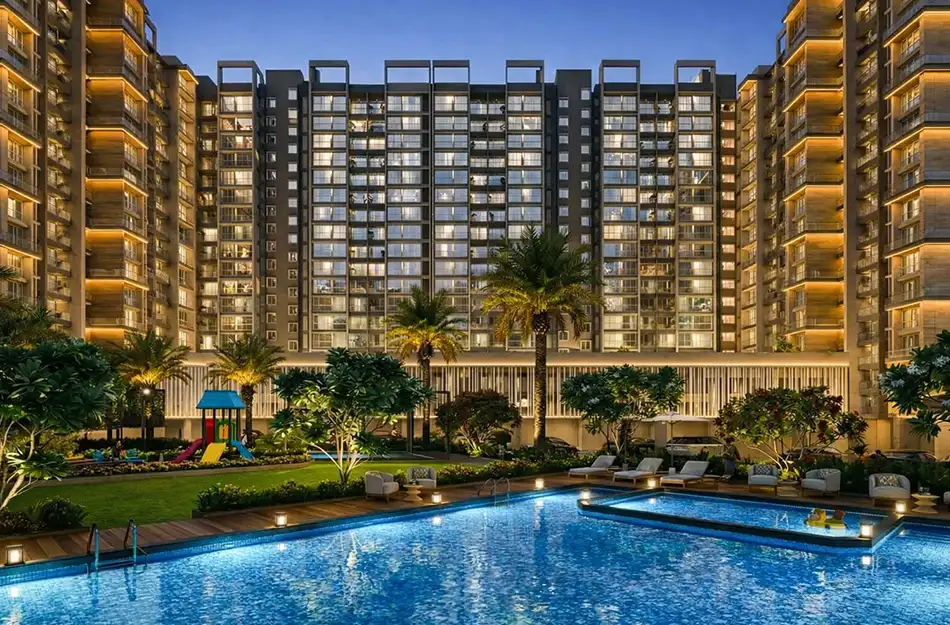
1 & 2 BHK homes in Upper Kharghar. Carpet 721 - 1,065 sq.ft. Launch timing subject to updates.

  • 1 & 2 BHK
  • Rs. 58 L - 83 L
  • MahaRERA: Awaited
View details
1 & 2 BHK flats in Panvel Navi Mumbai - Today Tattvam
Under Construction Panvel

Today Group

Today Tattvam

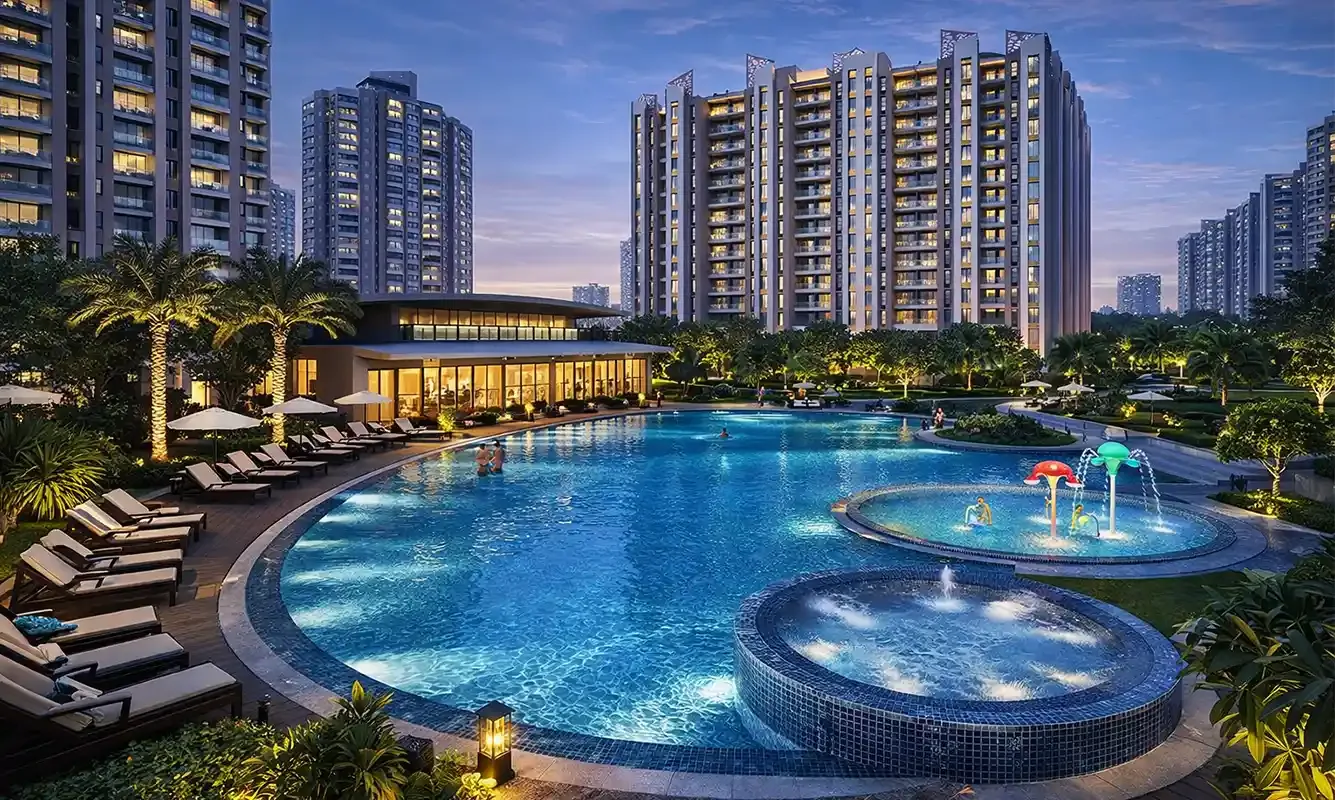
1 & 2 BHK homes in Panvel. Carpet 380 - 630 sq.ft. Possession Dec 2026.

  • 1 & 2 BHK
  • Rs. 55 L - 88 L+
  • MahaRERA: P52000004115
View details
2, 3 & 4 BHK flats in Panvel Navi Mumbai - L&T Crestoria Estate
Under Construction Panvel

L&T Realty

L&T Crestoria Estate

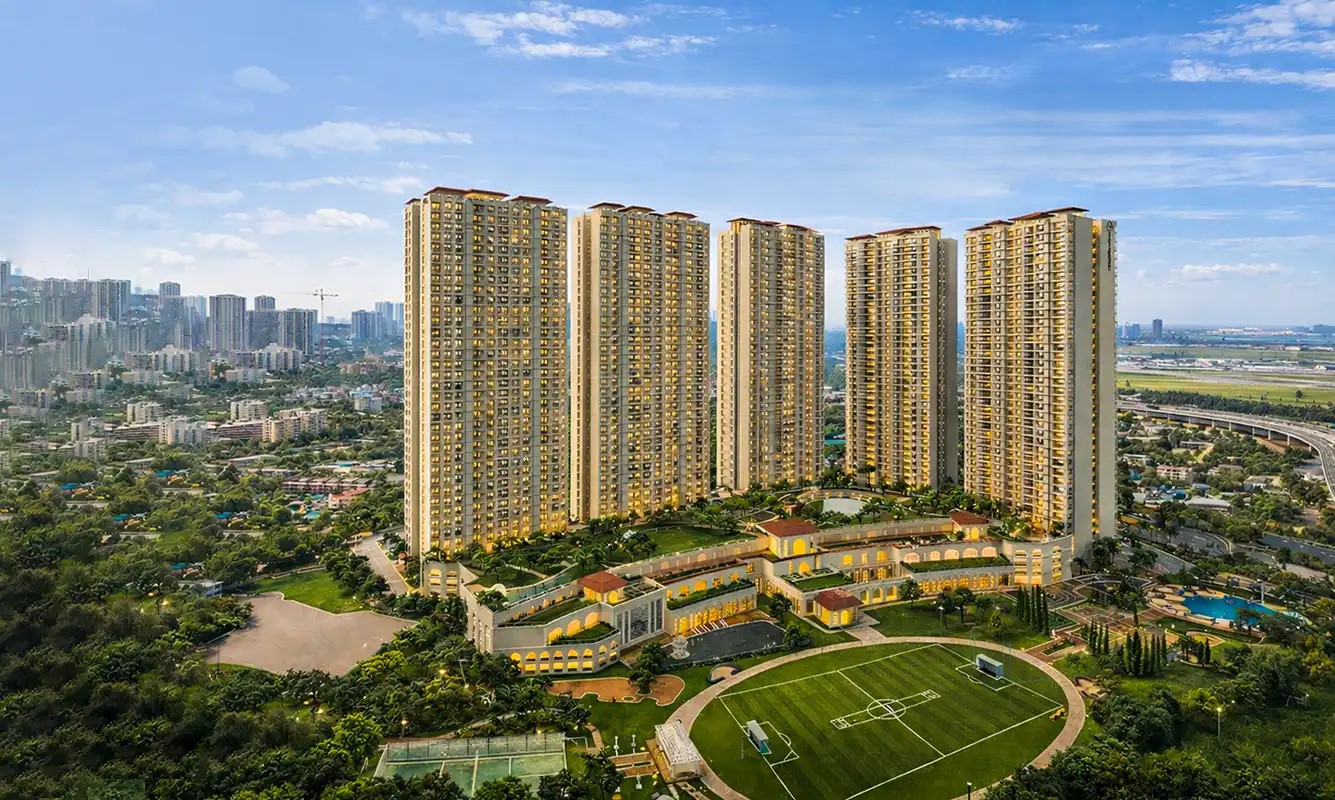
2, 3 & 4 BHK homes in Panvel. Carpet 785 - 1,789 sq.ft. Possession Dec 2030.

  • 2, 3 & 4 BHK
  • Rs. 1.25 Cr - 2.68 Cr
  • MahaRERA: PR1270002502892, PR1270002502891, PR1270002502890
View details
1, 2 & 3 BHK flats in Kharghar Navi Mumbai - Arihant Aalishan
Under Construction Kharghar

Arihant Superstructures

Arihant Aalishan

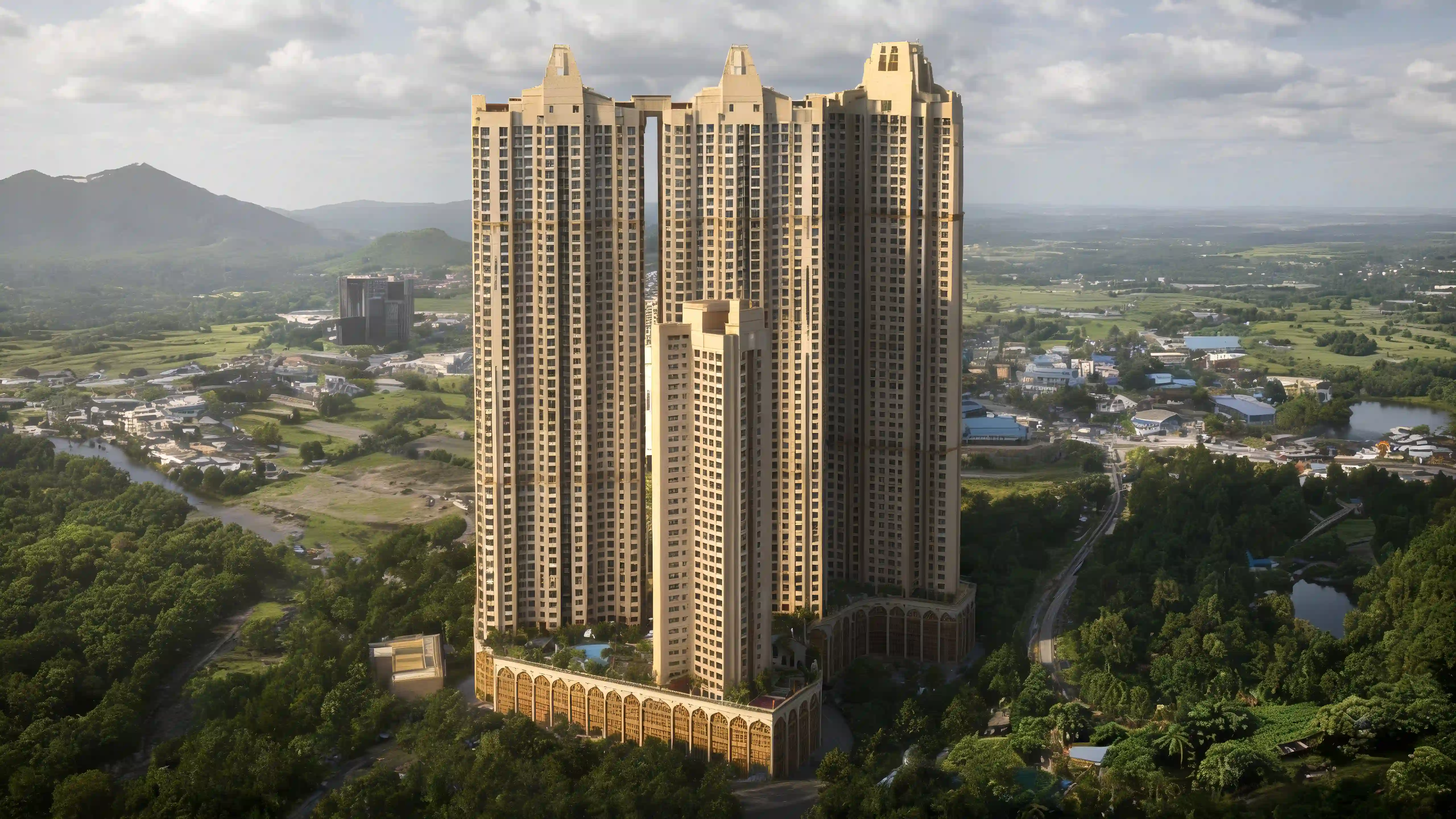
1, 2 & 3 BHK homes in Kharghar. Carpet 509 - 1,150 sq.ft. Under construction.

  • 1, 2 & 3 BHK
  • Rs. 75 L - 2.10 Cr*
  • MahaRERA: P52000017271
View details
2, 3 & 4 BHK flats in Panvel Navi Mumbai - Sai World City
Under Construction Panvel

Paradise Group

Sai World City

2, 3 & 4 BHK homes in Panvel. Carpet 713 - 1,955 sq.ft. Possession Dec 2029.

  • 2, 3 & 4 BHK
  • Rs. 95 L - 5.65 Cr
  • MahaRERA: P52000053727
View details
Edit Related Localities

Related localities.

Use these pages to compare the surrounding micro-markets.

Kharghar

Property in Kharghar

Premium residential node with metro access, green lifestyle, and strong social infrastructure - Navi Mumbai's most mature mid-premium market

Positioning Premium node
Buyer intent Families + upgraders
Buying lens Lifestyle + stability
  • Kharghar's appeal is layered. At the foundation is its extraordinary physical infrastructure - wide CIDCO roads, reliable water supply, sector-wise power distribution, and a civic environment that feels planned rather than improvised. On top of that sits a rich social infrastructure: reputed schools including DPS Navi Mumbai and Ryan International, hospitals, the massive 85-acre Central Park (one of Asia's largest urban parks), an 18-hole golf course, and well-developed commercial zones.
  • Metro Line 1, operational since November 2023, now connects Kharghar directly to CBD Belapur and Pendhar, with future extensions planned toward Khandeshwar and ultimately the Navi Mumbai International Airport. Properties within a kilometre of Kharghar's metro stations have seen an estimated 15-20% appreciation premium since the metro's launch.
  • The Navi Mumbai International Airport, approximately 14 km from Kharghar, commenced commercial operations in December 2025 - adding a structural appreciation catalyst to a node that already had strong fundamentals.
Explore Kharghar
Panvel

Property in Panvel

Navi Mumbai's fastest-appreciating node, supercharged by the Navi Mumbai International Airport and MTHL - the city's most compelling investment destination

Positioning Airport-led growth
Buyer intent Investor + commuter
Buying lens High appreciation
  • Panvel offers a rare combination: the growth momentum of an emerging market with the connectivity of an established one. The Panvel Railway Junction connects to CSMT via the Harbour Line and to Pune via the Deccan Express corridor. The Mumbai-Pune Expressway starts near Panvel. The Atal Setu (MTHL) puts South Mumbai 20-45 minutes away by car. And the Panvel-Karjat Rail Corridor, approximately 67% complete as of early 2026, will slash commute times further when operational.
  • For investors, new project launches in Panvel have been moving faster than pre-2020 levels according to local market observers. Budget segments starting below Rs. 40 lakh and mid-range options between Rs. 55 lakh and Rs. 1 crore are attracting buyers from across Mumbai and the diaspora. Township-format projects like Sai World City offer complete lifestyle ecosystems within the Panvel zone.
Explore Panvel
Taloja

Property in Taloja

Affordable, metro-connected, high-upside investment locality - Navi Mumbai's best value proposition for budget buyers

Positioning Affordable growth node
Buyer intent Budget + investor
Buying lens Metro upside
  • Taloja's investment case rests on three pillars: price, metro, and time. At current per sq ft rates of approximately Rs. 5,500 to Rs. 7,500, Taloja is underpriced relative to its connectivity trajectory. Metro Line 1's Pendhar terminus serves the Kharghar-Taloja belt, and the planned extension toward Khandeshwar will further reduce commute times to Belapur CBD, Mumbai Harbour Line stations, and ultimately the airport.
  • Market analysts tracking Navi Mumbai price movements note that Taloja's rate trajectory is likely to steepen once metro expansion reaches Phase 2 completion. Buyers who enter now are positioned ahead of that pricing shift.
  • For end-users, Taloja is a growing neighbourhood with improving civic amenities, CIDCO-planned roads, and increasing developer activity bringing newer, better-specified residential buildings.
Explore Taloja
Edit Related News

Recent reads.

A few useful updates if you want more context.

Is it too late to invest near Navi Mumbai airport in 2026?

It is too late for the earliest airport-entry prices, but not too late for the utility phase. The better question now is which locations can convert airport relevance into sustained rental demand, commercial activity, and practical end-use value.

What is the best area to invest in Navi Mumbai right now?

There is no single answer for every buyer. Kharghar is still the most balanced all-rounder, Panvel remains one of the strongest long-view growth stories, and Taloja works for buyers who need a lower entry point. Ulwe is still highly relevant for airport-led investors, but pricing discipline matters more now.

Which is better in 2026: Kharghar or Ulwe?

Kharghar is usually stronger for lifestyle, family end-use, and lower day-to-day compromise. Ulwe is more directly tied to the airport story and can appeal more to rental-yield and corridor-investment buyers. The right choice depends on whether you are solving for living quality, yield, or runway.

Does MTHL really affect Navi Mumbai property prices?

Yes, but indirectly as much as directly. The major shift is that improved access expands the buyer and tenant pool. That tends to support stronger demand for nodes where the commute improvement is matched by real livability and not just a map-level claim.

Edit Related Guides

Guides worth reading next.

A few more guide-led comparisons if you want to keep narrowing the shortlist.

Budget Guide Guide

Best 2 BHK under 1.5 Cr in Navi Mumbai

A budget-led 2 BHK guide for buyers trying to stay under Rs. 1.5 crore without giving up too much on locality fit or project quality.

Open guide
Buying Guide Guide

How to Buy a Flat in Navi Mumbai in 2026: Step-by-Step Checklist for First-Time Buyers

A practical how to buy a flat in Navi Mumbai guide for first-time buyers in 2026, from budgeting and location choice to MahaRERA checks, registration, and possession.

Open guide
Investment Guide Guide

Investment properties in Taloja for disciplined long-view buyers

A curated Taloja investment guide for buyers evaluating lower entry pricing, future upside, and project selection discipline.

Open guide

Want help turning this into a shortlist?

Share your brief and Basaao will help you compare the right next options.

Contact Basaao
Call WhatsApp