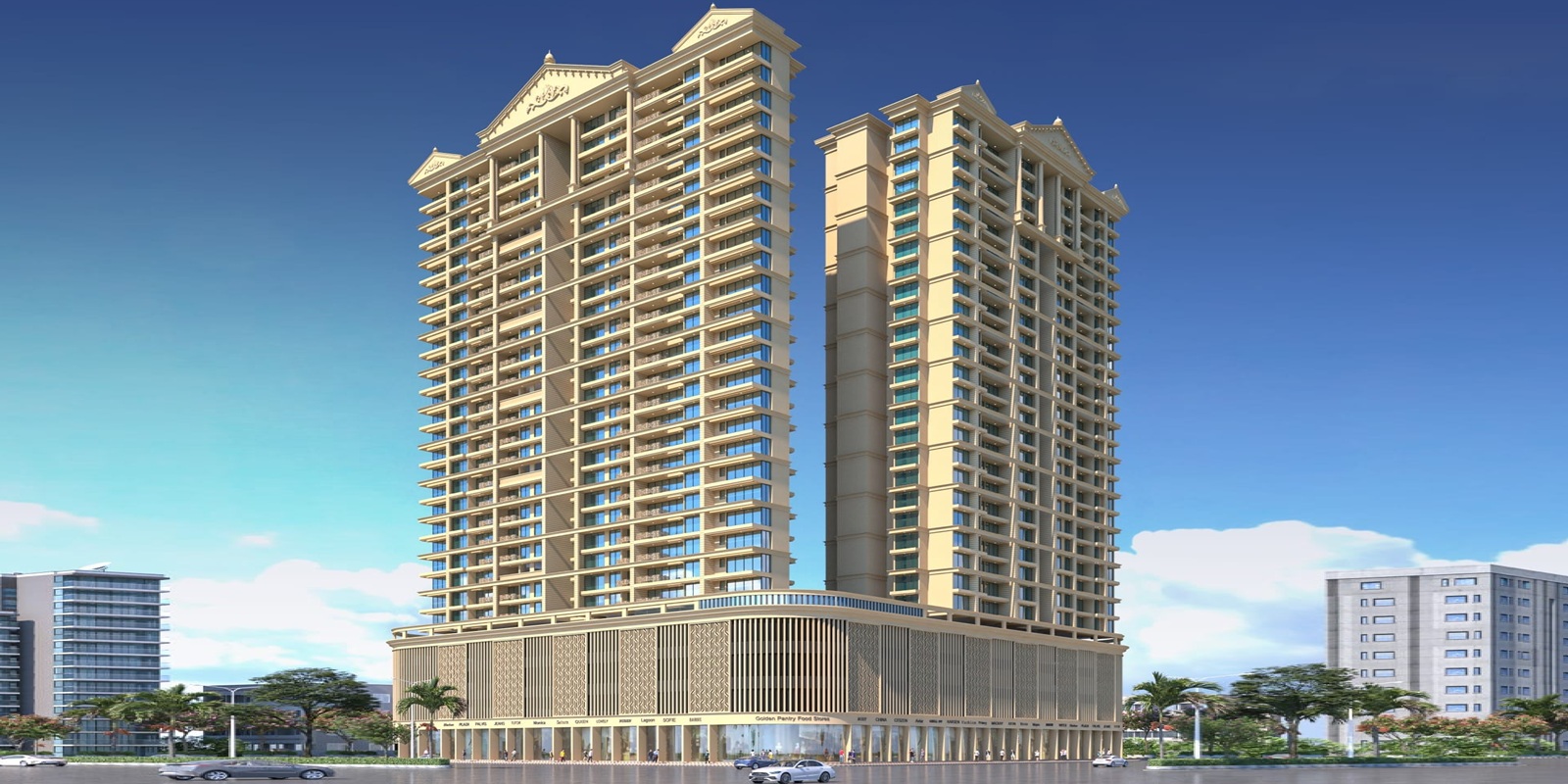
Flats in Airoli: the IT corridor buyer's guide
Airoli is the Navi Mumbai node with the clearest single reason to exist: work. It sits at the northern end of the city with a major IT park inside it, a bridge into Mulund, and a trans-harbour rail line to Thane. If your job is in that corridor, Airoli is close to unbeatable. If it is not, the case is much weaker, and it is worth being honest about which of those describes you.
Why Airoli exists as a market
Airoli's residential market is driven almost entirely by employment. The Mindspace business park sits within the node, and the wider corridor running north through Ghansoli and Mahape holds a substantial concentration of IT and corporate campuses. That produces steady, salaried, largely young rental and purchase demand.
The Airoli bridge connects directly into Mulund, which puts the central Mumbai suburbs within reach in a way no other Navi Mumbai node manages. The trans-harbour railway line links Airoli to Thane on one side and down through Ghansoli and Rabale towards Vashi on the other.
The result is a node that functions as a workplace-adjacent residential market rather than as a destination in its own right. That is not a criticism, but it does define who it suits.
- Mindspace business park within the node
- Airoli bridge into Mulund and the central suburbs
- Trans-harbour line to Thane and south towards Vashi
- Demand driven by salaried IT and corporate employment
The commute question, both ways
For anyone working in Airoli, Ghansoli, Mahape, or Thane, this node is genuinely hard to beat. Walk-to-work and short-drive-to-work are realistic here in a way they are not in most of Navi Mumbai, and that has a real quality-of-life value that price comparisons tend to miss.
For anyone working in south Mumbai, Airoli is the wrong end of the city. The harbour line does not serve it directly, and the road route into south Mumbai is long. Buyers who work at Nariman Point or Lower Parel and choose Airoli for price usually regret it.
For anyone working in the Kharghar or Panvel corridor, Airoli is also a poor fit. It is at the opposite end of Navi Mumbai, and the cross-city commute is substantial. Our guide on the best localities for Mumbai commuters covers how the nodes sort by destination.
Stock and pricing character
Airoli's residential stock skews towards mid-segment apartment projects built to serve the IT workforce, with a smaller premium segment and a meaningful supply of older CIDCO-era buildings in the established sectors.
Pricing generally sits below the Vashi and Palm Beach corridor but above the Taloja and outer Panvel belt, reflecting its employment base rather than any amenity premium. The node is well served for daily needs but does not carry the retail depth of Vashi.
Rental demand is the node's structural strength. A steady inflow of salaried professionals working in the corridor supports occupancy in a way that speculative nodes cannot match, which makes Airoli a more defensive yield market than its profile suggests.
Airoli against the southern belt
The comparison buyers usually run is Airoli against Kharghar, and the two are close on price but serve entirely different lives.
Kharghar has the airport narrative, the corporate park, Metro Line 1, and considerably more new supply and amenity-led development. It is the stronger appreciation story and the better fit for anyone working in the southern corridor or wanting a larger planned township environment.
Airoli has the better employment adjacency for the IT corridor, the shortest route into the central Mumbai suburbs, and a more reliable rental base. It has less appreciation narrative attached, which for some buyers is a feature rather than a fault.
If you are weighing the southern belt, properties in Kharghar shows the verified inventory we track there, and our Navi Mumbai versus Mumbai suburbs comparison frames the Mulund side of the choice.
What to check before buying in Airoli
Establish the building age band first. Airoli has both newer projects and substantial CIDCO-era stock, and the two are not comparable on price alone.
If buying for rental yield, verify the actual tenant profile in the specific building rather than assuming the corridor average. Buildings closer to the business park behave differently from those in the older residential sectors.
Check the MahaRERA position on anything under construction, and confirm the occupancy certificate status on completed stock. Our MahaRERA explainer covers what registration does and does not cover.
- Building age band: newer project or CIDCO-era stock
- Actual tenant profile in the specific building, not the corridor average
- MahaRERA registration on under-construction projects
- Occupancy certificate status on completed stock
End use versus rental in Airoli
Airoli supports both cases well, but they point at different parts of the node. For end use, the established residential sectors away from the business park offer more space, quieter surroundings, and better value, at the cost of a slightly longer commute to the office cluster.
For rental, proximity to the business park is the dominant variable. Tenants in this node are overwhelmingly working nearby, and walking distance commands a premium that holds through market cycles because it is tied to employment rather than sentiment.
That gives Airoli an unusual property for a Navi Mumbai node: its rental demand is largely independent of the airport and infrastructure narratives driving the southern belt. When speculative interest cools in the south, Airoli's tenant base does not move, because it is anchored to offices that are already built and occupied.
The corollary is that Airoli does not participate in the upside of those narratives either. Buyers should choose it for the employment adjacency, not in the hope that it reprices the way Kharghar or Ulwe might.
- End use: established sectors away from the business park offer better value
- Rental: walking distance to the business park is the dominant price driver
- Demand is anchored to existing offices, not to infrastructure narratives
- Lower volatility in both directions than the southern nodes
Where Airoli sits in a Navi Mumbai shortlist
Airoli belongs on a shortlist when the commute is the deciding factor and the destination is the northern corridor, Thane, or the central Mumbai suburbs. In that scenario it usually wins outright, because no other Navi Mumbai node is close.
It belongs off the shortlist when the destination is south Mumbai or the Kharghar and Panvel belt, when the priority is appreciation, or when the buyer wants a large planned township environment with amenity depth. The southern nodes serve all three better.
For buyers genuinely unsure which end of the city fits, the practical test is to run the actual commute both ways on a working day before comparing any prices at all. Our overview of where to live in Navi Mumbai sets out how the nodes differ on that axis.