Flood risk and the monsoon: assessing a Navi Mumbai property

Navi Mumbai sits on reclaimed and low-lying coastal land beside creeks and wetlands, and receives very heavy monsoon rainfall. Flood and waterlogging risk is therefore real and highly local: two buildings a few hundred metres apart can have entirely different experiences. Assessing the specific address matters far more than any general view of a node.

Why risk is building-specific, not node-specific

Reputation attaches to whole nodes, which is nearly useless as a guide. Within any Navi Mumbai node there are pockets that drain well and pockets that do not, and the difference is driven by elevation, drainage design and proximity to a creek or nallah.

A single metre of elevation change is enough to separate a building that has never taken water from one that floods regularly. That difference is invisible on a listing and frequently invisible during a dry-season viewing.

Drainage capacity is the second variable and it is not uniform. Some pockets were built with adequate storm drainage and some were not, and the ones that were not tend to be where informal or later development filled in.

So the question to answer is never whether a node floods. It is whether this building, on this plot, has taken water, and how recently.

  • Elevation differences of a metre change everything
  • Drainage capacity varies pocket by pocket
  • Creek and nallah proximity is a direct risk factor
  • Ask about the building, never about the node

The question that actually works

Ask residents, not the seller or the agent, whether water has entered the compound, the stilt parking or the ground floor, and in which years.

Residents answer this readily and accurately because it is memorable. Sellers and agents have an incentive to characterise a recurring event as exceptional, and a single bad monsoon is easy to describe that way.

Ask the watchman, who has usually been there longer than most residents and has no stake in the sale.

Ask the society whether it has spent money on drainage, pumps, plinth raising or waterproofing of the stilt area. Money spent is the most reliable evidence of a problem, because societies do not fund solutions to problems they do not have.

What to inspect

Look for water marks on compound walls, on stilt columns and at the base of the building, which persist long after the water has gone.

Look at the plinth height relative to the road. A building whose ground floor sits at or below road level in a low-lying pocket is exposed in a way one raised well above it is not.

Look at the stilt parking specifically, since that is where water enters first and where the damage is most visible.

Inside a flat, look at ceilings and external walls for ingress from the facade rather than only for plumbing leaks, and check the condition of window seals on the weather side.

  • Water marks on compound walls and stilt columns
  • Plinth height relative to the surrounding road
  • Condition of the stilt parking area
  • Facade ingress and window seals inside the flat

Floor choice and the trade-off

Higher floors are safer from ingress but depend entirely on the lift, and a building that floods at ground level frequently loses power and lift service at the same time.

That combination is what makes flooding genuinely disruptive rather than merely inconvenient, and it is worth thinking about specifically if anyone in the household has mobility limitations. Our note on buying for elderly parents covers that interaction.

Ground and first floors carry the direct ingress risk but avoid the isolation problem. Neither is straightforwardly better, and the right answer depends on the building's actual history.

Ask specifically whether the society has backup power that covers the lifts, and whether pumps have been installed and maintained.

What it means for cost and insurance

Water damage is the most common household loss in this region, and how a policy treats flood and ingress varies. Our note on home insurance for a Navi Mumbai flat covers what to check, and this is the peril most likely to be tested.

A building with a flooding history may also face higher society costs over time through repeated repairs, pump maintenance and drainage work, which arrive as levies.

Resale is the third consequence. A known flooding history narrows the buyer pool, particularly among buyers who ask the questions above, and that shows up as slower sales rather than as an obvious discount.

None of this makes such a property unbuyable. It makes it something to price rather than to discover.

  • Confirm how your policy treats flood and ingress specifically
  • Expect higher society costs where repairs recur
  • A flooding history narrows the future buyer pool
  • Price the risk rather than discovering it

Timing your viewing

The single most useful thing a buyer can do is view during or immediately after heavy rain. Everything described above becomes visible rather than inferred.

That is not always possible, and sellers understandably prefer dry-season viewings. Where you cannot see it yourself, rely on residents and on physical evidence rather than on assurances.

If you are buying between monsoons, ask specifically about the most recent one by year. A vague answer about it generally being fine is not an answer.

And weigh this alongside the other things a weekday and off-peak visit reveals, as our note on the biggest mistakes buyers make covers.

What a society can actually do about it

Buildings with a water history are not stuck with it, and what a society has done is often the most informative thing you can learn during diligence.

Raising the plinth or the compound entry threshold is the most effective intervention and the most expensive, so a society that has done it was taking the problem seriously.

Sump pumps with backup power are the common middle option, and they work provided they are maintained and tested before each monsoon rather than discovered to be faulty during one.

Improving internal drainage, clearing outfalls and coordinating with the civic body on the surrounding storm drains is the slow work, and it is where an active committee makes a genuine difference.

Ask what has been done, when, and what it cost. A society that answers precisely has managed the problem; one that says it was a one-off year has probably not.

EditRelated Properties

Projects worth exploring.

If this theme fits your search, start here.

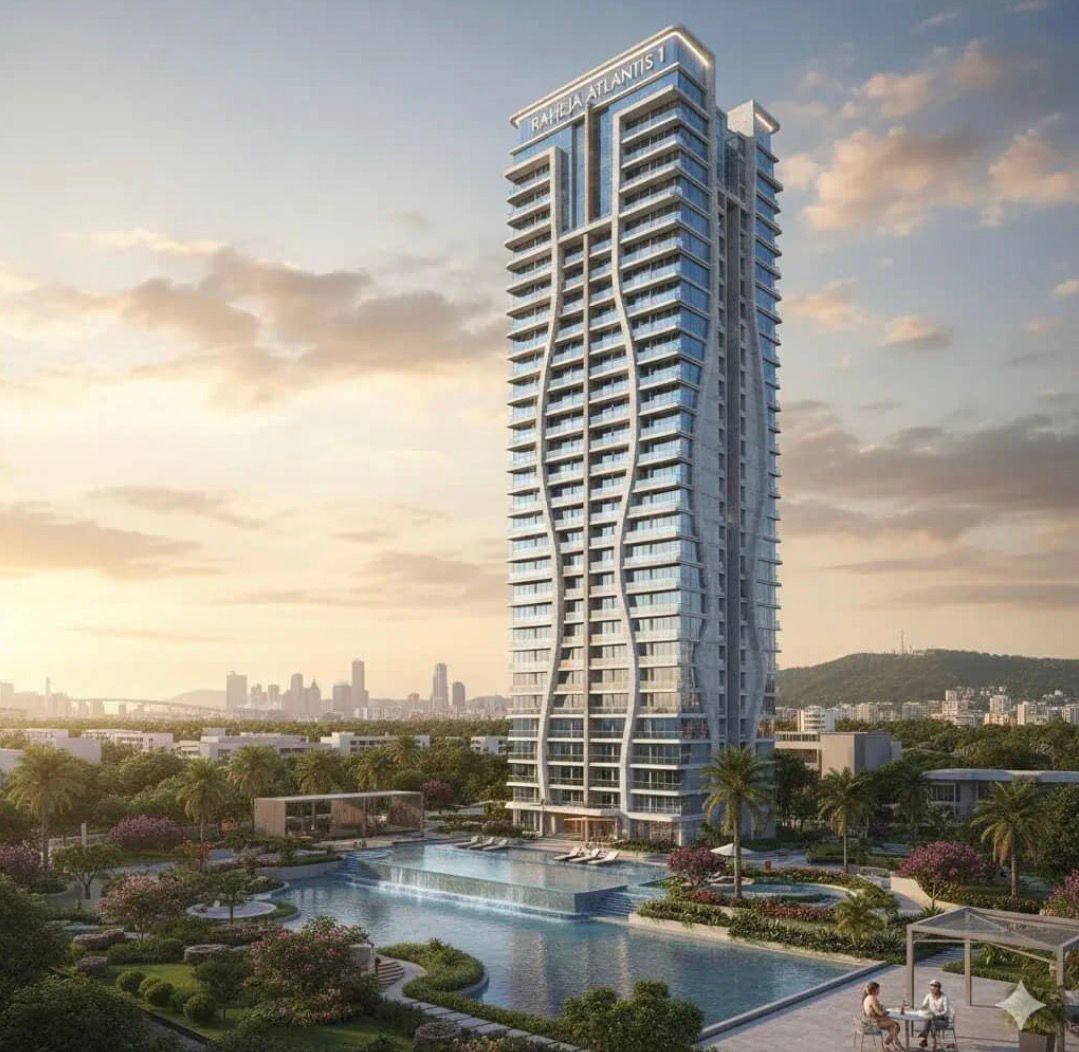
3 & 4 BHK flats in Juinagar Navi Mumbai - Raheja Atlantis 1
New LaunchJuinagar

Raheja Universal Pvt Ltd

Raheja Atlantis 1

3 & 4 BHK homes in Juinagar. Carpet 1360 - 2025 sq.ft. Possession Dec 2031.

  • 3 & 4 BHK
  • Rs. 5.49 Cr - 8.17 Cr
  • MahaRERA: PM1330002501097
View details
Office Spaces & Retail Shops in Nerul Navi Mumbai - 24 High
Under ConstructionNerul

Dream Apex Realities Limited

24 High

Commercial office spaces and retail units opposite DY Patil Stadium in Nerul. Carpet 430 - 820 sq.ft. Possession Apr 2026.

  • Office Spaces & Retail Shops
  • Rs. 92 L - 1.74 Cr
  • MahaRERA: P51700025150
View details
1.5, 2 & 2.5 BHK flats in Juinagar Navi Mumbai - Raheja Lunaris
New LaunchJuinagar

Raheja Universal Pvt Ltd

Raheja Lunaris

1.5, 2 & 2.5 BHK homes in Juinagar. Carpet 452 - 725 sq.ft. Possession Dec 2029.

  • 1.5, 2 & 2.5 BHK
  • Rs. 1.12 Cr - 1.89 Cr
  • MahaRERA: P51700076867
View details
Premium Offices & High-Street Retail in Nerul Navi Mumbai - Kamdhenu Zeus
New LaunchNerul

Kamdhenu Builders & Developers

Kamdhenu Zeus

Launch-stage commercial tower with premium offices and retail in Shiravane, Nerul. Carpet 484 - 1587 sq.ft. Possession Dec 2030.

  • Premium Offices & High-Street Retail
  • Rs. 1.25 Cr - 2.38 Cr
  • MahaRERA: PC1330002500481
View details
2 & 3 BHK flats in Nerul Navi Mumbai - Sai World One
New LaunchNerul

Paradise Group

Sai World One

2 & 3 BHK homes in Nerul. Carpet 860 - 1290 sq.ft. Possession Dec 2029.

  • 2 & 3 BHK
  • Rs. 1.80 Cr - 2.70 Cr
  • MahaRERA: Awaited
View details
2, 3 & 4 BHK flats in Juinagar Navi Mumbai - Raheja Solaris 3
New LaunchJuinagar

Raheja Universal Pvt Ltd

Raheja Solaris 3

2, 3 & 4 BHK homes in Juinagar. Carpet 745 - 1646 sq.ft. Possession Dec 2028.

  • 2, 3 & 4 BHK
  • Rs. 1.80 Cr - 3.98 Cr
  • MahaRERA: P51700053551
View details
EditRelated Localities

Related localities.

Use these pages to compare the surrounding micro-markets.

Nerul

Property in Nerul

Mature, premium Navi Mumbai node - established social infrastructure, strong rail connectivity, aspirational address

PositioningEstablished premium
Buyer intentPremium end-use
Buying lensMature living
  • Nerul's appeal centres on its completeness as a neighbourhood. Every category of social infrastructure - from schools like DAV Public School and Apeejay School, to hospitals, to well-stocked commercial markets and malls - is available and functioning at a mature level. Residents do not need to travel to other nodes for daily needs. That convenience, rare in even the best planned cities, commands a consistent premium in Nerul's property market.
  • New project launches in Nerul are genuinely rare, which means that when quality projects do come to market here, they attract strong demand from informed buyers. Today Nova Vista is one such project - a premium development in a locality where scarcity of new inventory is itself a pricing support.
Explore Nerul
Panvel

Property in Panvel

Navi Mumbai's fastest-appreciating node, supercharged by the Navi Mumbai International Airport and MTHL - the city's most compelling investment destination

PositioningAirport-led growth
Buyer intentInvestor + commuter
Buying lensHigh appreciation
  • Panvel offers a rare combination: the growth momentum of an emerging market with the connectivity of an established one. The Panvel Railway Junction connects to CSMT via the Harbour Line and to Pune via the Deccan Express corridor. The Mumbai-Pune Expressway starts near Panvel. The Atal Setu (MTHL) puts South Mumbai 20-45 minutes away by car. And the Panvel-Karjat Rail Corridor, approximately 67% complete as of early 2026, will slash commute times further when operational.
  • For investors, new project launches in Panvel have been moving faster than pre-2020 levels according to local market observers. Budget segments starting below Rs. 40 lakh and mid-range options between Rs. 55 lakh and Rs. 1 crore are attracting buyers from across Mumbai and the diaspora. Township-format projects like Sai World City offer complete lifestyle ecosystems within the Panvel zone.
Explore Panvel
Juinagar

Property in Juinagar

Well-connected, undervalued mid-premium node - Navi Mumbai's hidden value for discerning long-term buyers

PositioningUndervalued connector
Buyer intentValue-led end-use
Buying lensConnectivity value
  • The core advantage of Juinagar is its railway connectivity. The Trans-Harbour Line station at Juinagar provides direct train services to Thane and onward connections to Mumbai. Combined with road access to the Sion-Panvel Highway and proximity to Nerul's developed commercial zone, Juinagar is not an isolated residential pocket - it is a well-connected node that has simply remained below the radar of many buyers.
  • Raheja Jade City, the flagship project in Juinagar featured on Basaao, brings K Raheja Corp's development quality to this node - a developer with a strong track record of delivery in the Mumbai region. This combination of developer credibility and locality upside is what makes Juinagar worth including in any serious Navi Mumbai property shortlist.
Explore Juinagar
EditRelated News

Recent reads.

A few useful updates if you want more context.

EditRelated Guides

Guides worth reading next.

A few more guide-led comparisons if you want to keep narrowing the shortlist.

Verification GuideGuide

Assessing safety and security before you buy

How to judge a specific building and neighbourhood rather than relying on a locality's reputation, and which security features actually matter day to day.

Open guide
Verification GuideGuide

Buying a flat that already has a tenant

What you inherit when you buy a tenanted flat, how the existing agreement binds you, what to verify before committing, and when the discount is worth taking.

Open guide
Verification GuideGuide

Buying a resale flat in Navi Mumbai: the full checklist

Everything to verify before buying resale: society dues, structural condition, sinking fund, transfer charges and the paperwork sellers hope you will not ask for.

Open guide
EditGuide FAQs

Quick questions, answered clearly.

Straight answers collected from the guide's buyer questions in one quick scan.

Which parts of Navi Mumbai flood?

The useful question is about a specific building rather than a node. Within any node, elevation, drainage design and creek or nallah proximity vary enough that two buildings a few hundred metres apart can have entirely different histories.

How do I find out if a building has flooded?

Ask residents and the watchman rather than the seller or agent, since they answer accurately and have no stake in the sale. Ask the society whether it has spent money on drainage, pumps or plinth raising, since money spent is the most reliable evidence.

What should I look for during a viewing?

Water marks on compound walls and stilt columns, plinth height relative to the road, the condition of the stilt parking, and inside the flat, signs of facade ingress rather than only plumbing leaks.

Is a higher floor safer in a flood-prone building?

Safer from ingress but dependent on the lift, and buildings that flood often lose power and lift service simultaneously. That isolation matters particularly where anyone in the household has mobility limitations.

Does flood risk affect resale?

Yes, though usually as slower sales rather than an obvious discount, because a known history narrows the pool of buyers who ask these questions. It also affects society costs through repeated repairs and how your insurance responds.

Should I avoid ground floor flats in Navi Mumbai?

Not as a rule, since it depends entirely on the building's plinth height and drainage rather than on the floor number. A ground floor raised well above road level in a well-drained pocket is safer than a first floor in a building that has taken water repeatedly.

Why risk is building-specific, not node-specific

Reputation attaches to whole nodes, which is nearly useless as a guide. Within any Navi Mumbai node there are pockets that drain well and pockets that do not, and the difference is driven by elevation, drainage design and proximity to a creek or nallah.

What to inspect

Look for water marks on compound walls, on stilt columns and at the base of the building, which persist long after the water has gone.

What it means for cost and insurance

Water damage is the most common household loss in this region, and how a policy treats flood and ingress varies. Our note on home insurance for a Navi Mumbai flat covers what to check, and this is the peril most likely to be tested.

What a society can actually do about it

Buildings with a water history are not stuck with it, and what a society has done is often the most informative thing you can learn during diligence.

Want help turning this into a shortlist?

Share your brief and Basaao will help you compare the right next options.

Contact Basaao
CallWhatsApp