Property in Dronagiri and Uran: the port and airport frontier

Dronagiri and Uran are the most speculative addresses in Navi Mumbai, and buyers should go in knowing that. They sit at the southern edge of the region, closest to JNPT, to the Atal Setu landing at Chirle and to the airport corridor. The infrastructure case is genuinely strong. The liveability case is genuinely weak, and the gap between the two is where most of the risk sits.

Why anyone looks here at all

Three pieces of infrastructure converge on this belt. JNPT is one of India's largest container ports and anchors a substantial logistics economy. The Mumbai Trans Harbour Link lands at Chirle, putting south Mumbai within a genuinely short drive for the first time. And Navi Mumbai International Airport sits within the wider catchment.

That combination is the entire investment thesis, and it is not fabricated. Our note on the Mumbai Trans Harbour Link and its property impact covers where that benefit actually landed, and this belt is the clearest beneficiary on the map.

CIDCO has planned Dronagiri as a full node, so the underlying layout is a sector grid rather than unplanned sprawl. What is missing is not the plan but its execution timeline.

  • JNPT and the surrounding logistics economy
  • Atal Setu landing at Chirle, the shortest road route to south Mumbai
  • Airport catchment position
  • CIDCO sector planning already laid out

What is actually missing

Social infrastructure is the honest gap. Schools, hospitals, retail and the everyday density that makes a node liveable are thin compared with Panvel, Kharghar or the established belt. A family moving here today would be commuting for most non-work needs.

Rental demand is correspondingly thin. Much of the local employment is port and logistics work with its own housing patterns, so the salaried tenant base that supports yields in Airoli or Ghansoli is not present in the same way.

Timelines are the third issue. Infrastructure-led appreciation depends on delivery, and delivery in this belt has historically run behind announcement. Buyers should underwrite on a long horizon and be honest with themselves about how long they can hold.

Who this belt suits

It suits investors with a genuinely long horizon, spare capital and tolerance for illiquidity. The infrastructure case is real, but converting it into price takes years and the exit is not easy in a thin market.

It suits buyers with a direct connection to the port or logistics economy, for whom proximity is a working requirement rather than a bet.

It does not suit first-time end-use buyers, families needing schools and healthcare now, or anyone who may need to sell inside a few years. For those buyers the established airport-adjacent belt is a better expression of the same theme: our guide to Navi Mumbai airport catchment localities covers where the airport story is already priced in with liveability attached.

How to reduce the risk

Check MahaRERA registration on everything without exception. In frontier markets the proportion of loosely documented inventory rises, and registration is the single most useful filter. Our MahaRERA explainer sets out what it does and does not guarantee.

Verify the land title category carefully. This belt has a mix of CIDCO-allotted, gaothan and agricultural-converted land, and the differences matter enormously for resale and financing.

Confirm that a lender will actually fund the specific project. Financing availability is a useful market signal: where banks decline, they usually have a reason worth understanding.

  • MahaRERA registration, without exception
  • Land title category: CIDCO-allotted, gaothan or converted agricultural
  • Whether mainstream lenders will fund the specific project
  • A realistic holding horizon, measured in years rather than months

How to size a position here

If you decide the thesis is sound, the way you buy matters as much as what you buy. This is a frontier market, and the standard advice for frontier markets applies: size the position so that being wrong about the timeline is survivable.

That means not committing capital you may need within the holding horizon, and not using leverage that assumes appreciation to service. A long, illiquid hold funded by a loan priced on optimistic assumptions is the single most common way buyers get hurt in belts like this.

It also means preferring projects and developers with the capacity to finish. In a market where delivery lags announcement, developer balance sheet matters more than brochure quality. A completed but unremarkable building is worth considerably more than an excellent one that stalls.

Finally, be clear about the exit before the entry. Ask who buys this from you in five or seven years and why. If the honest answer is only that someone else will believe the same story, that is a speculative position rather than an investment, and it should be sized as one.

  • Size so that a delayed timeline is survivable
  • Avoid leverage that depends on appreciation to service
  • Weight developer capacity to complete over brochure quality
  • Name the likely exit buyer before committing

Signals worth tracking before committing

Because this belt trades on future infrastructure, the useful discipline is to identify what would confirm or falsify the thesis, and then watch for it rather than for launch announcements.

Occupancy is the first signal. Completed buildings that stay empty tell you demand has not arrived regardless of what pricing suggests. Drive through in the evening and count lit windows; it is cruder than any report and considerably more honest.

Retail is the second. Everyday retail arrives when a resident population reaches a threshold, so the appearance of pharmacies, clinics and grocery chains is a better indicator of genuine settlement than any number of new project launches.

Lending is the third. When mainstream banks begin funding a wider range of projects in a belt, they have done diligence you cannot easily replicate. A broadening of lender appetite is a meaningful positive signal; a narrowing one is a warning.

None of these move quickly, which is the point. This is a belt where patience is the strategy, and the signals worth acting on operate on the same timescale as the investment itself.

  • Evening occupancy in completed buildings
  • Arrival of everyday retail, not new project launches
  • Breadth of mainstream lender appetite for local projects
EditRelated Properties

Projects worth exploring.

If this theme fits your search, start here.

1 & 2 BHK flats in Panvel Navi Mumbai - Today Saubhagyam
Under ConstructionPanvel

Today Group

Today Saubhagyam

1 & 2 BHK homes in Panvel. Carpet 436 - 580 sq.ft. Possession Dec 2028.

  • 1 & 2 BHK
  • Rs. 46 L - 69 L
  • MahaRERA: P52000053782
View details
1 & 2 BHK flats in Taloja Navi Mumbai - Geetanjali Bellezza
New LaunchTaloja

Siddharth Builders

Geetanjali Bellezza

1 & 2 BHK homes in Taloja. Carpet 441 - 711 sq.ft. Possession Dec 2030.

  • 1 & 2 BHK
  • Rs. 45 L - 75 L
  • MahaRERA: P52000079990
View details
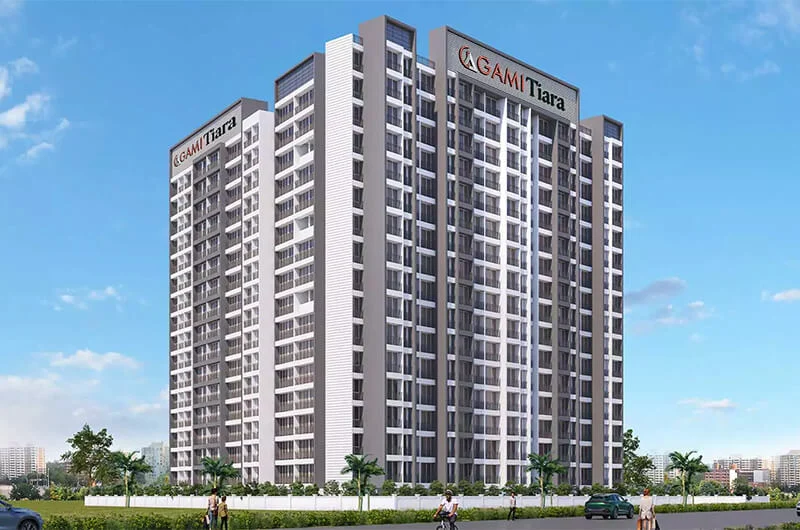
1 & 2 BHK flats in Taloja Navi Mumbai - Gami Tiara
New LaunchTaloja

Gami Group

Gami Tiara

1 & 2 BHK homes in Taloja. Carpet 350 - 437 sq.ft. Possession Dec 2026.

  • 1 & 2 BHK
  • Rs. 35 L - 44 L
  • MahaRERA: P52000052631
View details
1 & 2 BHK flats in Taloja Navi Mumbai - Prakriti Park
Under ConstructionTaloja

Khwaish Enterprises

Prakriti Park

1 & 2 BHK homes in Taloja. Carpet 437 - 635 sq.ft. Possession Dec 2026.

  • 1 & 2 BHK
  • Rs. 37 L - 56 L
  • MahaRERA: P52000008575
View details
1 & 2 BHK flats in Taloja Navi Mumbai - Arihant Anaika
Under ConstructionTaloja

Arihant Superstructures Ltd

Arihant Anaika

1 & 2 BHK homes in Taloja. Carpet 434 - 560 sq.ft. Possession Dec 2028.

  • 1 & 2 BHK
  • Rs. 36 L - 54 L
  • MahaRERA: P52000029482
View details
1 & 2 BHK flats in Taloja Navi Mumbai - Mahaavir Amber
Under ConstructionTaloja

Mahaavir Superstructures Ltd

Mahaavir Amber

1 & 2 BHK homes in Taloja. Carpet 384 - 523 sq.ft. Possession Dec 2027.

  • 1 & 2 BHK
  • Rs. 39.9 L - 52 L
  • MahaRERA: P52000080039
View details
EditRelated Localities

Related localities.

Use these pages to compare the surrounding micro-markets.

Kharghar

Property in Kharghar

Premium residential node with metro access, green lifestyle, and strong social infrastructure - Navi Mumbai's most mature mid-premium market

PositioningPremium node
Buyer intentFamilies + upgraders
Buying lensLifestyle + stability
  • Kharghar's appeal is layered. At the foundation is its extraordinary physical infrastructure - wide CIDCO roads, reliable water supply, sector-wise power distribution, and a civic environment that feels planned rather than improvised. On top of that sits a rich social infrastructure: reputed schools including DPS Navi Mumbai and Ryan International, hospitals, the massive 85-acre Central Park (one of Asia's largest urban parks), an 18-hole golf course, and well-developed commercial zones.
  • Metro Line 1, operational since November 2023, now connects Kharghar directly to CBD Belapur and Pendhar, with future extensions planned toward Khandeshwar and ultimately the Navi Mumbai International Airport. Properties within a kilometre of Kharghar's metro stations have seen an estimated 15-20% appreciation premium since the metro's launch.
  • The Navi Mumbai International Airport, approximately 14 km from Kharghar, commenced commercial operations in December 2025 - adding a structural appreciation catalyst to a node that already had strong fundamentals.
Explore Kharghar
Panvel

Property in Panvel

Navi Mumbai's fastest-appreciating node, supercharged by the Navi Mumbai International Airport and MTHL - the city's most compelling investment destination

PositioningAirport-led growth
Buyer intentInvestor + commuter
Buying lensHigh appreciation
  • Panvel offers a rare combination: the growth momentum of an emerging market with the connectivity of an established one. The Panvel Railway Junction connects to CSMT via the Harbour Line and to Pune via the Deccan Express corridor. The Mumbai-Pune Expressway starts near Panvel. The Atal Setu (MTHL) puts South Mumbai 20-45 minutes away by car. And the Panvel-Karjat Rail Corridor, approximately 67% complete as of early 2026, will slash commute times further when operational.
  • For investors, new project launches in Panvel have been moving faster than pre-2020 levels according to local market observers. Budget segments starting below Rs. 40 lakh and mid-range options between Rs. 55 lakh and Rs. 1 crore are attracting buyers from across Mumbai and the diaspora. Township-format projects like Sai World City offer complete lifestyle ecosystems within the Panvel zone.
Explore Panvel
Taloja

Property in Taloja

Affordable, metro-connected, high-upside investment locality - Navi Mumbai's best value proposition for budget buyers

PositioningAffordable growth node
Buyer intentBudget + investor
Buying lensMetro upside
  • Taloja's investment case rests on three pillars: price, metro, and time. At current per sq ft rates of approximately Rs. 5,500 to Rs. 7,500, Taloja is underpriced relative to its connectivity trajectory. Metro Line 1's Pendhar terminus serves the Kharghar-Taloja belt, and the planned extension toward Khandeshwar will further reduce commute times to Belapur CBD, Mumbai Harbour Line stations, and ultimately the airport.
  • Market analysts tracking Navi Mumbai price movements note that Taloja's rate trajectory is likely to steepen once metro expansion reaches Phase 2 completion. Buyers who enter now are positioned ahead of that pricing shift.
  • For end-users, Taloja is a growing neighbourhood with improving civic amenities, CIDCO-planned roads, and increasing developer activity bringing newer, better-specified residential buildings.
Explore Taloja
EditRelated News

Recent reads.

A few useful updates if you want more context.

EditRelated Guides

Guides worth reading next.

A few more guide-led comparisons if you want to keep narrowing the shortlist.

Investment GuideGuide

Navi Mumbai Property Investment Guide 2026: Best Areas, Prices & Airport Impact

An investor-first Navi Mumbai property investment guide covering 2026 price signals, airport-led demand, MTHL connectivity, and the best areas to buy property in Navi Mumbai.

Open guide
Investment GuideGuide

Best New Projects in Upper Kharghar for Investors

Which Upper Kharghar projects make sense for investors in 2026, what the realistic return case looks like, and where the risk actually sits.

Open guide
Investment GuideGuide

CIDCO Plots in Panvel: An Investment Guide

How CIDCO plot ownership works in the Panvel belt, what makes it different from buying a flat, and the verification that decides whether it is safe.

Open guide
EditGuide FAQs

Quick questions, answered clearly.

Straight answers collected from the guide's buyer questions in one quick scan.

Is Dronagiri a good investment?

It carries a real infrastructure case through JNPT, the Atal Setu landing at Chirle and airport proximity, but converting that into price takes years and the market is thin and illiquid. It suits long-horizon investors with spare capital, not buyers who may need to exit soon.

Can I live in Dronagiri or Uran now?

You can, but social infrastructure is thin. Schools, hospitals, retail and everyday density lag well behind Panvel or Kharghar, so a household would commute for most non-work needs. Families needing that infrastructure today should look at the established airport catchment instead.

Did the Atal Setu change this belt?

Materially, yes. The Mumbai Trans Harbour Link lands at Chirle, which is the closest any road connection has brought south Mumbai to this part of the region. That is the strongest single element of the investment case.

What is the biggest risk here?

Timeline risk. The infrastructure case depends on delivery, and delivery in this belt has historically lagged announcement. The second risk is liquidity: a thin market is hard to exit quickly at a fair price.

What should I check before buying in Uran or Dronagiri?

MahaRERA registration without exception, the land title category, and whether mainstream lenders will fund the project. Where banks decline to lend, there is usually a reason worth understanding before you commit.

Why anyone looks here at all

Three pieces of infrastructure converge on this belt. JNPT is one of India's largest container ports and anchors a substantial logistics economy. The Mumbai Trans Harbour Link lands at Chirle, putting south Mumbai within a genuinely short drive for the first time. And Navi Mumbai International Airport sits within the wider catchment.

What is actually missing

Social infrastructure is the honest gap. Schools, hospitals, retail and the everyday density that makes a node liveable are thin compared with Panvel, Kharghar or the established belt. A family moving here today would be commuting for most non-work needs.

How to reduce the risk

Check MahaRERA registration on everything without exception. In frontier markets the proportion of loosely documented inventory rises, and registration is the single most useful filter. Our MahaRERA explainer sets out what it does and does not guarantee.

How to size a position here

If you decide the thesis is sound, the way you buy matters as much as what you buy. This is a frontier market, and the standard advice for frontier markets applies: size the position so that being wrong about the timeline is survivable.

Want help turning this into a shortlist?

Share your brief and Basaao will help you compare the right next options.

Contact Basaao
CallWhatsApp