Rooftop solar for a housing society: is it worth it

Rooftop solar has become a common proposal at general body meetings, usually presented with a payback figure and limited scrutiny. For many societies it is a genuinely good investment. For some it is not, and the difference comes down to what the building actually consumes and how the arrangement is structured.

What solar can realistically power

The important thing to understand first is that a society installation typically serves the common-area load rather than individual flats.

Common load means lifts, water pumps, corridor and compound lighting, security systems and any club facilities. That is a meaningful and continuous consumption, which is precisely why it suits solar.

Individual flat consumption is metered separately to each household, and supplying that from a shared rooftop installation is a different and more complicated arrangement.

So the honest framing is that solar reduces the society's electricity bill, and therefore maintenance charges, rather than reducing your own flat's bill. Our note on how maintenance charges are calculated covers where that saving would appear.

  • Typically serves common-area load, not individual flats
  • Lifts, pumps, lighting, security and club facilities
  • Flat consumption is separately metered to each household
  • The saving appears in maintenance, not your own bill

The economics in outline

The proposition is a capital cost now against a reduced electricity bill for many years, with the panels having a long operating life.

Whether it works depends on the building's actual common-area consumption, the usable roof area, shading from adjacent structures, and the tariff the society currently pays.

Net metering arrangements, where surplus generation is exported and credited, materially affect the calculation, and the applicable policy is set by the state and utility and has been revised over time. Confirm the current position rather than relying on a projection in a proposal.

A society with high common-area consumption, unshaded roof space and a high tariff has a strong case. One with modest consumption and a shaded or crowded roof may not.

What a committee should verify

Actual consumption first. Take twelve months of common-area bills and establish the real load rather than accepting the vendor's assumption, which is frequently generous.

Usable roof area second, after accounting for water tanks, lift machine rooms, existing installations, access requirements and any area residents use.

Shading third, assessed across the year rather than on the day of the site visit. An adjacent tower or a planned development changes the output materially.

And structural capacity fourth, since the roof must carry the installation and any waterproofing must be reinstated properly. A solar installation that causes terrace leakage is an expensive way to save on electricity, and top-floor residents will be the ones who discover it.

  • Twelve months of actual common-area bills
  • Usable roof area after tanks, machine rooms and access
  • Shading assessed across the year, including planned development
  • Structural capacity and proper waterproofing reinstatement

Ownership models and their trade-offs

The society can buy the system outright, which requires capital but retains all the saving and the asset.

Alternatively a developer or operator may install and own it, selling power to the society at an agreed rate under a long-term arrangement. That removes the capital requirement and the maintenance responsibility, at the cost of a share of the benefit and a long contractual commitment.

The second model deserves careful reading of the contract, particularly the term, the tariff escalation, what happens if the operator fails, and who owns the installation at the end.

Neither is inherently better, but they suit different societies. One with reserves and a capable committee may do better owning; one without either may prefer the operated model despite the reduced benefit.

How it should be decided

Through the general body with a proper proposal, not by a committee acting on an enthusiastic member's recommendation.

Obtain more than one quotation and compare on the same assumptions, since vendors size systems differently and a larger system is not automatically better if the consumption does not support it.

Fund it properly. Whether from the sinking fund, a specific levy or an operator arrangement, the funding route should be decided explicitly rather than assumed, and members should understand what they are committing to.

And treat the payback figure sceptically. Projections rest on assumed consumption, assumed tariff escalation and assumed generation, and modest changes to any of those move the answer considerably.

  • Decide at the general body with a proper proposal
  • Compare multiple quotations on identical assumptions
  • Decide the funding route explicitly
  • Treat payback projections as estimates, not facts

The maintenance nobody budgets for

Panels need periodic cleaning to maintain output, and in a coastal, dusty environment that is more frequent than in ideal conditions.

Inverters have a shorter life than panels and will need replacement within the system's operating life, which should be in the financial model rather than discovered later.

Monitoring matters. A system with a fault can underperform for months without anyone noticing, which quietly destroys the returns the proposal promised.

Assign responsibility explicitly. Installations that nobody owns operationally are the ones that degrade, and the pattern is the same as with any other society asset.

A reasonable conclusion

For a society with substantial common-area consumption, usable unshaded roof and a competent committee, rooftop solar is generally a sound investment that reduces maintenance charges for years.

For a small building with modest common load, a crowded roof or a committee without the capacity to manage the asset, it is frequently oversold.

The way to tell is to do the arithmetic on your own building's actual bills rather than on a vendor's example, which takes an evening and settles the question.

And where the answer is yes, buy it as a long-term asset with a maintenance plan attached, in the same way the building's other major systems should be managed.

Where solar sits among a society's spending options

A society has finite funds and a queue of things that need money, so solar should be judged against the alternatives rather than in isolation.

Deferred structural repair comes first, always. A building with pending waterproofing, plumbing renewal or structural work should do that before anything discretionary, because deferring it compounds the cost. Our note on how maintenance charges are calculated covers why the sinking fund exists for exactly this.

Water infrastructure usually comes second. Storage capacity and pump reliability affect every resident daily, and our note on water supply in Navi Mumbai covers how much a shortfall costs in both money and irritation.

Power backup covering lifts and pumps often ranks above solar too, since it addresses a failure mode rather than a running cost, and our note on which amenities are worth paying for treats it as one of the few that genuinely earn their keep.

Solar is a sound investment for a society that has already dealt with those. For one that has not, it is an attractive project being funded ahead of a necessary one, which is a pattern committees fall into because the necessary work is duller.
EditRelated Properties

Projects worth exploring.

If this theme fits your search, start here.

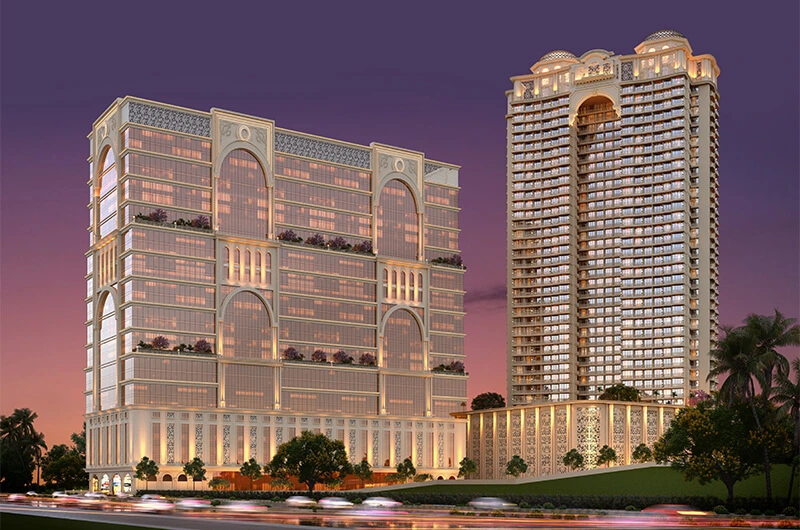
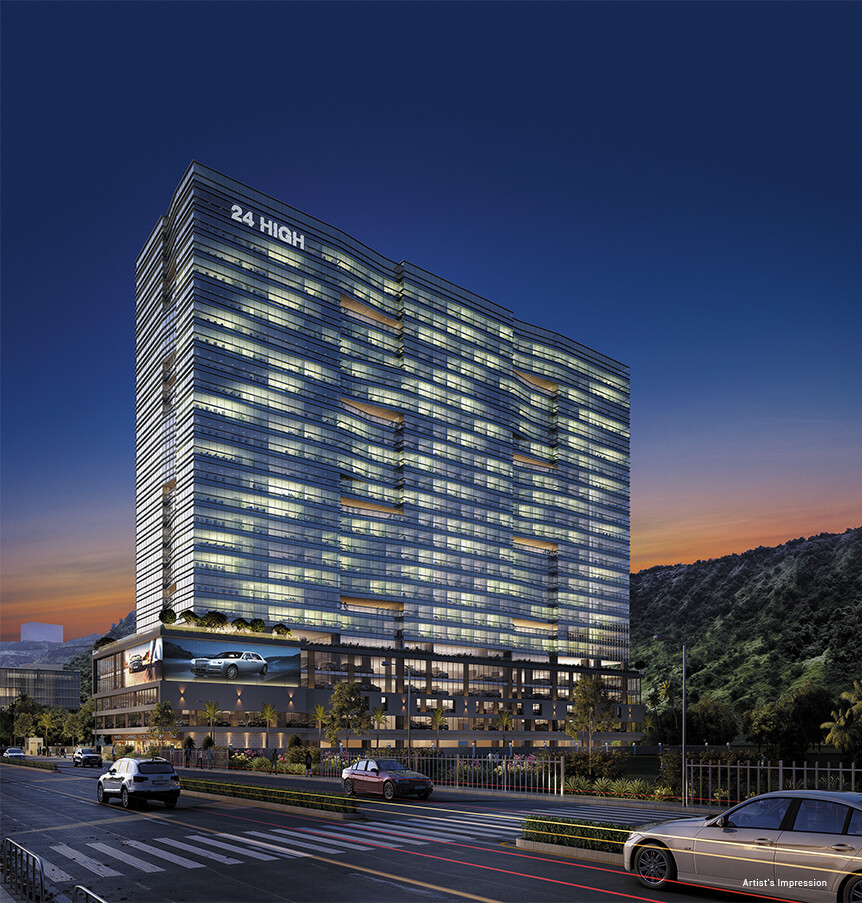
Office Spaces & Retail Shops in Nerul Navi Mumbai - 24 High
Under ConstructionNerul

Dream Apex Realities Limited

24 High

Commercial office spaces and retail units opposite DY Patil Stadium in Nerul. Carpet 430 - 820 sq.ft. Possession Apr 2026.

  • Office Spaces & Retail Shops
  • Rs. 92 L - 1.74 Cr
  • MahaRERA: P51700025150
View details
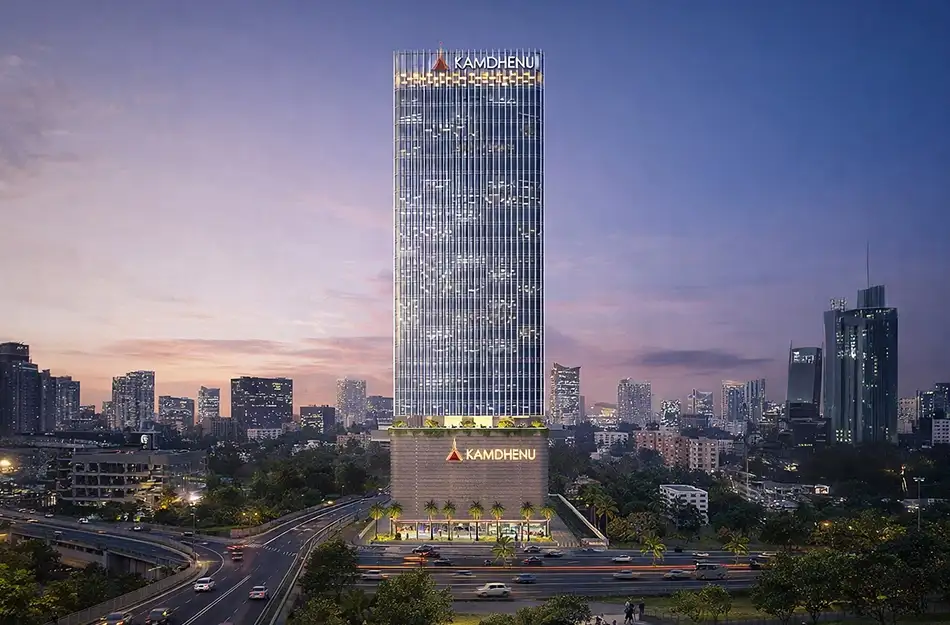
Premium Offices & High-Street Retail in Nerul Navi Mumbai - Kamdhenu Zeus
New LaunchNerul

Kamdhenu Builders & Developers

Kamdhenu Zeus

Launch-stage commercial tower with premium offices and retail in Shiravane, Nerul. Carpet 484 - 1587 sq.ft. Possession Dec 2030.

  • Premium Offices & High-Street Retail
  • Rs. 1.25 Cr - 2.38 Cr
  • MahaRERA: PC1330002500481
View details
2 & 3 BHK flats in Nerul Navi Mumbai - Sai World One
New LaunchNerul

Paradise Group

Sai World One

2 & 3 BHK homes in Nerul. Carpet 860 - 1290 sq.ft. Possession Dec 2029.

  • 2 & 3 BHK
  • Rs. 1.80 Cr - 2.70 Cr
  • MahaRERA: Awaited
View details
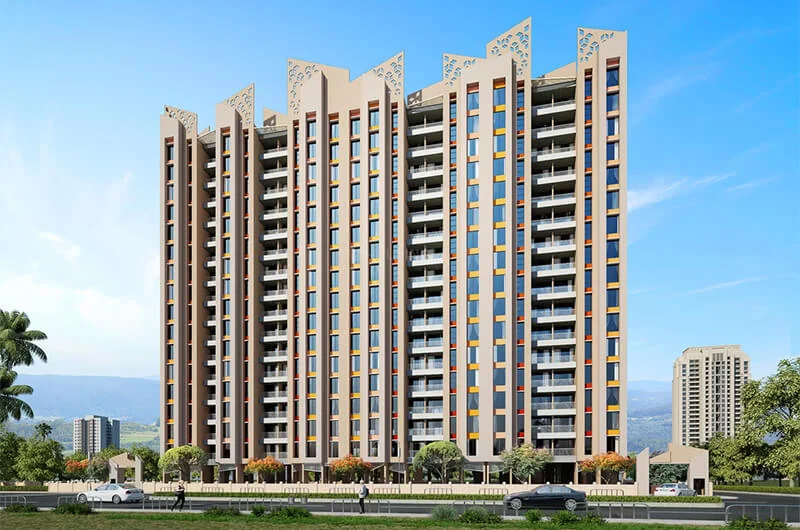
1 & 2 BHK flats in Panvel Navi Mumbai - Today Saubhagyam
Under ConstructionPanvel

Today Group

Today Saubhagyam

1 & 2 BHK homes in Panvel. Carpet 436 - 580 sq.ft. Possession Dec 2028.

  • 1 & 2 BHK
  • Rs. 46 L - 69 L
  • MahaRERA: P52000053782
View details
2, 3 & 4 BHK flats in Kharghar Navi Mumbai - Kasturi Regius Luxe
Under ConstructionKharghar

Kasturi Developers

Kasturi Regius Luxe

2, 3 & 4 BHK homes in Kharghar. Carpet 812 - 1945 sq.ft. Possession Dec 2027.

  • 2, 3 & 4 BHK
  • Rs. 1.62 Cr - 3.88
  • MahaRERA: P52000079465
View details
2 & 3 BHK flats in Kharghar Navi Mumbai - Bhagwati Avenoir
New LaunchKharghar

Bhagwati Developers

Bhagwati Avenoir

2 & 3 BHK homes in Kharghar. Carpet 804 - 1152 sq.ft. Possession Dec 2028.

  • 2 & 3 BHK
  • Rs. 1.65 Cr - 2 Cr
  • MahaRERA: Awaited
View details
EditRelated Localities

Related localities.

Use these pages to compare the surrounding micro-markets.

Kharghar

Property in Kharghar

Premium residential node with metro access, green lifestyle, and strong social infrastructure - Navi Mumbai's most mature mid-premium market

PositioningPremium node
Buyer intentFamilies + upgraders
Buying lensLifestyle + stability
  • Kharghar's appeal is layered. At the foundation is its extraordinary physical infrastructure - wide CIDCO roads, reliable water supply, sector-wise power distribution, and a civic environment that feels planned rather than improvised. On top of that sits a rich social infrastructure: reputed schools including DPS Navi Mumbai and Ryan International, hospitals, the massive 85-acre Central Park (one of Asia's largest urban parks), an 18-hole golf course, and well-developed commercial zones.
  • Metro Line 1, operational since November 2023, now connects Kharghar directly to CBD Belapur and Pendhar, with future extensions planned toward Khandeshwar and ultimately the Navi Mumbai International Airport. Properties within a kilometre of Kharghar's metro stations have seen an estimated 15-20% appreciation premium since the metro's launch.
  • The Navi Mumbai International Airport, approximately 14 km from Kharghar, commenced commercial operations in December 2025 - adding a structural appreciation catalyst to a node that already had strong fundamentals.
Explore Kharghar
Nerul

Property in Nerul

Mature, premium Navi Mumbai node - established social infrastructure, strong rail connectivity, aspirational address

PositioningEstablished premium
Buyer intentPremium end-use
Buying lensMature living
  • Nerul's appeal centres on its completeness as a neighbourhood. Every category of social infrastructure - from schools like DAV Public School and Apeejay School, to hospitals, to well-stocked commercial markets and malls - is available and functioning at a mature level. Residents do not need to travel to other nodes for daily needs. That convenience, rare in even the best planned cities, commands a consistent premium in Nerul's property market.
  • New project launches in Nerul are genuinely rare, which means that when quality projects do come to market here, they attract strong demand from informed buyers. Today Nova Vista is one such project - a premium development in a locality where scarcity of new inventory is itself a pricing support.
Explore Nerul
Panvel

Property in Panvel

Navi Mumbai's fastest-appreciating node, supercharged by the Navi Mumbai International Airport and MTHL - the city's most compelling investment destination

PositioningAirport-led growth
Buyer intentInvestor + commuter
Buying lensHigh appreciation
  • Panvel offers a rare combination: the growth momentum of an emerging market with the connectivity of an established one. The Panvel Railway Junction connects to CSMT via the Harbour Line and to Pune via the Deccan Express corridor. The Mumbai-Pune Expressway starts near Panvel. The Atal Setu (MTHL) puts South Mumbai 20-45 minutes away by car. And the Panvel-Karjat Rail Corridor, approximately 67% complete as of early 2026, will slash commute times further when operational.
  • For investors, new project launches in Panvel have been moving faster than pre-2020 levels according to local market observers. Budget segments starting below Rs. 40 lakh and mid-range options between Rs. 55 lakh and Rs. 1 crore are attracting buyers from across Mumbai and the diaspora. Township-format projects like Sai World City offer complete lifestyle ecosystems within the Panvel zone.
Explore Panvel
EditRelated News

Recent reads.

A few useful updates if you want more context.

EditRelated Guides

Guides worth reading next.

A few more guide-led comparisons if you want to keep narrowing the shortlist.

Cost GuideGuide

Home insurance for a Navi Mumbai flat: what actually applies

What a society policy covers and what it does not, why structure and contents are separate, and the risks specific to this region worth insuring against.

Open guide
Cost GuideGuide

How much brokerage can you save on a 1.5 crore flat in Navi Mumbai?

A cost-first guide showing how zero brokerage changes the true acquisition math on a Rs. 1.5 crore home purchase.

Open guide
Cost GuideGuide

Property tax in Navi Mumbai: who assesses it and what you pay

How property tax works across Navi Mumbai's municipal bodies, why bills differ between adjacent belts, and what happens when mutation is never completed.

Open guide
EditGuide FAQs

Quick questions, answered clearly.

Straight answers collected from the guide's buyer questions in one quick scan.

Does society solar reduce my own electricity bill?

Usually not directly. A society installation typically serves common-area load such as lifts, pumps and lighting, so the saving appears as reduced maintenance charges rather than on your individually metered flat bill.

How does a society know whether solar is worth it?

Take twelve months of actual common-area bills rather than accepting a vendor's assumed load, then assess usable roof area after tanks and access, shading across the year, and structural capacity including waterproofing reinstatement.

Should the society buy the system or use an operator?

Buying retains the full saving and the asset but requires capital and management. An operator model removes both at the cost of a share of the benefit and a long contract, whose term, tariff escalation and end-of-term ownership need careful reading.

What ongoing costs does solar carry?

Periodic panel cleaning, which is more frequent in a coastal dusty environment, inverter replacement within the system's life, and monitoring, since a faulty system can underperform for months without anyone noticing.

Are payback projections reliable?

Treat them as estimates. They rest on assumed consumption, tariff escalation and generation, and modest changes to any of those move the answer considerably. Do the arithmetic on your own building's actual bills.

What solar can realistically power

The important thing to understand first is that a society installation typically serves the common-area load rather than individual flats.

What a committee should verify

Actual consumption first. Take twelve months of common-area bills and establish the real load rather than accepting the vendor's assumption, which is frequently generous.

How it should be decided

Through the general body with a proper proposal, not by a committee acting on an enthusiastic member's recommendation.

Want help turning this into a shortlist?

Share your brief and Basaao will help you compare the right next options.

Contact Basaao
CallWhatsApp