When a builder becomes insolvent: what homebuyers can do

A delayed project is a problem. An insolvent developer is a different problem, with a different forum, different remedies and a different set of decisions for the buyer. Understanding which situation you are in matters, because pursuing the wrong route wastes time you may not have.

Delay and insolvency are not the same

A delayed project has a developer who is still functioning and can be compelled to perform or to compensate. Our note on MahaRERA rights when a builder delays possession covers that position, which is the more common one.

An insolvent developer cannot pay its debts, and the question shifts from compelling performance to how a limited pool of value is divided among everyone owed money.

That is a fundamentally different exercise, conducted in a different forum, under a framework designed for collective resolution rather than individual remedies.

The practical signal is not delay itself but the developer stopping work, staff leaving, other creditors moving, or the company entering proceedings. Delay alone does not mean insolvency.

  • Delay: developer functioning, can be compelled to perform or compensate
  • Insolvency: limited value divided among all creditors
  • Different forum and a collective rather than individual process
  • Watch for stopped work and other creditors moving, not delay alone

Homebuyers are treated as financial creditors

This was a significant change and it materially improved the buyer's position. Allottees in a real estate project are treated as financial creditors under the insolvency framework.

That gives homebuyers representation in the committee of creditors, which decides on resolution proposals, rather than leaving them as bystanders to a process run by banks.

It also allows homebuyers, subject to threshold requirements on the number or proportion of allottees acting together, to initiate proceedings themselves.

Those thresholds exist to prevent a single disgruntled buyer triggering proceedings, and they mean that acting collectively is not merely helpful here but structurally necessary.

What actually happens to your flat

The realistic outcomes are that a resolution applicant takes over and completes the project, that the project is completed under some other arrangement, or that the company is liquidated.

Completion by a new developer is the best outcome for buyers and the one the framework is designed to encourage, since a half-built project is worth more completed than broken up.

It usually involves buyers contributing further, accepting changes to specification or timeline, or both. A resolution that requires no further money from anyone is rare.

Liquidation is the worst outcome, and recovery in that scenario depends on what value exists and how it is distributed. Buyers should be realistic that it may be considerably less than they paid.

  • A new developer completing the project is the best realistic outcome
  • It usually requires buyers to contribute or accept changes
  • Liquidation is the worst case with uncertain recovery
  • A resolution costing buyers nothing further is rare

Choosing between forums

Where a developer is functioning but delayed, the RERA route is generally faster and gives an individual buyer a remedy without depending on anyone else.

Where a developer is genuinely insolvent, a RERA order may be unenforceable in practice because there is nothing to enforce against, and the insolvency process takes precedence in ways that can affect other proceedings.

The decision therefore turns on an assessment of the developer's actual condition rather than on which remedy sounds better, and it is worth taking advice on that assessment specifically.

Buyers sometimes pursue RERA to an order and then discover it cannot be realised. That is not a wasted effort in every case, but it is a reason to form a view about solvency early.

Why organising matters more here than anywhere

The thresholds for initiating proceedings require allottees to act together, and representation on the creditors committee is exercised collectively through an authorised representative.

That means an unorganised set of buyers has considerably less influence than an organised one, regardless of how many there are.

Form or join the buyers association early, keep a shared record of payments and communications, and pool the cost of competent legal advice. Individually each buyer can afford little; collectively they can afford good representation.

This mirrors the point our note on redevelopment makes about societies: collective bargaining positions are built before they are needed, not during the crisis.

  • Initiation thresholds require allottees acting together
  • Committee representation is exercised collectively
  • Pool records and legal cost early
  • Organise before the crisis, not during it

Protecting your position from the start

Keep every payment receipt, the agreement, the MahaRERA registration details and all correspondence. In an insolvency your claim must be proved, and buyers with incomplete records are at a real disadvantage.

Pay only into the designated project account, which is the mechanism our note on the RERA escrow rule describes, and never into an alternative account however convenient it is presented as.

Watch for the warning signs: work stopping, contractors unpaid, sales offices closing, sudden discounting to raise cash, and other buyers reporting the same.

And review your position before releasing the next construction-linked payment, as our note on slab-wise payment plans covers. Money paid to a failing developer is the hardest to recover.

Reducing the risk before you buy

Developer financial capacity matters more than brochure quality, and it is the thing buyers assess least. A developer funding construction entirely from future sales is exposed in a way one with balance sheet strength is not.

Check the delivery record, specifically for completed projects rather than launched ones, and prefer developers with several completions in the same belt.

Lender panels are a useful external signal. Where mainstream banks fund buyers in a project, they have done diligence on the developer that you cannot easily replicate.

And weigh stage against price honestly. Our note on under-construction versus ready-to-move covers the trade, and developer failure is the tail risk that the ready-to-move premium is partly buying out.
EditRelated Properties

Projects worth exploring.

If this theme fits your search, start here.

1 & 2 BHK flats in Panvel Navi Mumbai - Today Saubhagyam
Under ConstructionPanvel

Today Group

Today Saubhagyam

1 & 2 BHK homes in Panvel. Carpet 436 - 580 sq.ft. Possession Dec 2028.

  • 1 & 2 BHK
  • Rs. 46 L - 69 L
  • MahaRERA: P52000053782
View details
2, 3 & 4 BHK flats in Kharghar Navi Mumbai - Kasturi Regius Luxe
Under ConstructionKharghar

Kasturi Developers

Kasturi Regius Luxe

2, 3 & 4 BHK homes in Kharghar. Carpet 812 - 1945 sq.ft. Possession Dec 2027.

  • 2, 3 & 4 BHK
  • Rs. 1.62 Cr - 3.88
  • MahaRERA: P52000079465
View details
2 & 3 BHK flats in Kharghar Navi Mumbai - Bhagwati Avenoir
New LaunchKharghar

Bhagwati Developers

Bhagwati Avenoir

2 & 3 BHK homes in Kharghar. Carpet 804 - 1152 sq.ft. Possession Dec 2028.

  • 2 & 3 BHK
  • Rs. 1.65 Cr - 2 Cr
  • MahaRERA: Awaited
View details
2 & 3 BHK flats in Kharghar Navi Mumbai - Today Royal I Land 27
New LaunchKharghar

Today Royal Group

Today Royal I Land 27

2 & 3 BHK homes in Kharghar. Carpet 663 - 1308 sq.ft. Possession Dec 2030.

  • 2 & 3 BHK
  • Rs. 1.45 Cr - 2.85 Cr
  • MahaRERA: PR1270002501658
View details
2, 3 & 4 BHK flats in Kharghar Navi Mumbai - Codename Showstopper
New LaunchKharghar

Metro Group & Satyam Developers

Codename Showstopper

2, 3 & 4 BHK homes in Kharghar. Carpet 950 - 2500 sq.ft. Possession Dec 2029.

  • 2, 3 & 4 BHK
  • Rs. 2.40 Cr - 5.50 Cr
  • MahaRERA: Awaited
View details
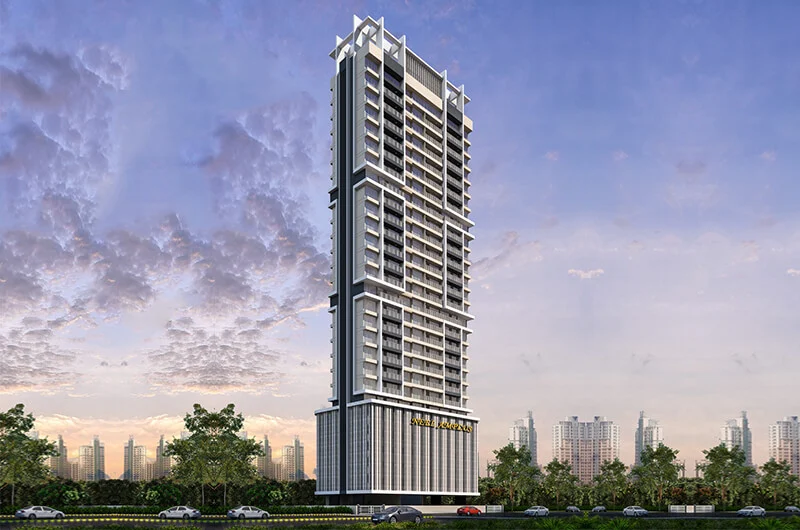
2 BHK flats in Kharghar Navi Mumbai - Neel Amplus
New LaunchKharghar

Neelkanth Enterprises

Neel Amplus

2 BHK homes in Kharghar. Carpet 644 sq.ft. Possession Dec 2030.

  • 2 BHK
  • Rs. 1.34 Cr
  • MahaRERA: PR1270002500127
View details
EditRelated Localities

Related localities.

Use these pages to compare the surrounding micro-markets.

Kharghar

Property in Kharghar

Premium residential node with metro access, green lifestyle, and strong social infrastructure - Navi Mumbai's most mature mid-premium market

PositioningPremium node
Buyer intentFamilies + upgraders
Buying lensLifestyle + stability
  • Kharghar's appeal is layered. At the foundation is its extraordinary physical infrastructure - wide CIDCO roads, reliable water supply, sector-wise power distribution, and a civic environment that feels planned rather than improvised. On top of that sits a rich social infrastructure: reputed schools including DPS Navi Mumbai and Ryan International, hospitals, the massive 85-acre Central Park (one of Asia's largest urban parks), an 18-hole golf course, and well-developed commercial zones.
  • Metro Line 1, operational since November 2023, now connects Kharghar directly to CBD Belapur and Pendhar, with future extensions planned toward Khandeshwar and ultimately the Navi Mumbai International Airport. Properties within a kilometre of Kharghar's metro stations have seen an estimated 15-20% appreciation premium since the metro's launch.
  • The Navi Mumbai International Airport, approximately 14 km from Kharghar, commenced commercial operations in December 2025 - adding a structural appreciation catalyst to a node that already had strong fundamentals.
Explore Kharghar
Panvel

Property in Panvel

Navi Mumbai's fastest-appreciating node, supercharged by the Navi Mumbai International Airport and MTHL - the city's most compelling investment destination

PositioningAirport-led growth
Buyer intentInvestor + commuter
Buying lensHigh appreciation
  • Panvel offers a rare combination: the growth momentum of an emerging market with the connectivity of an established one. The Panvel Railway Junction connects to CSMT via the Harbour Line and to Pune via the Deccan Express corridor. The Mumbai-Pune Expressway starts near Panvel. The Atal Setu (MTHL) puts South Mumbai 20-45 minutes away by car. And the Panvel-Karjat Rail Corridor, approximately 67% complete as of early 2026, will slash commute times further when operational.
  • For investors, new project launches in Panvel have been moving faster than pre-2020 levels according to local market observers. Budget segments starting below Rs. 40 lakh and mid-range options between Rs. 55 lakh and Rs. 1 crore are attracting buyers from across Mumbai and the diaspora. Township-format projects like Sai World City offer complete lifestyle ecosystems within the Panvel zone.
Explore Panvel
Taloja

Property in Taloja

Affordable, metro-connected, high-upside investment locality - Navi Mumbai's best value proposition for budget buyers

PositioningAffordable growth node
Buyer intentBudget + investor
Buying lensMetro upside
  • Taloja's investment case rests on three pillars: price, metro, and time. At current per sq ft rates of approximately Rs. 5,500 to Rs. 7,500, Taloja is underpriced relative to its connectivity trajectory. Metro Line 1's Pendhar terminus serves the Kharghar-Taloja belt, and the planned extension toward Khandeshwar will further reduce commute times to Belapur CBD, Mumbai Harbour Line stations, and ultimately the airport.
  • Market analysts tracking Navi Mumbai price movements note that Taloja's rate trajectory is likely to steepen once metro expansion reaches Phase 2 completion. Buyers who enter now are positioned ahead of that pricing shift.
  • For end-users, Taloja is a growing neighbourhood with improving civic amenities, CIDCO-planned roads, and increasing developer activity bringing newer, better-specified residential buildings.
Explore Taloja
EditRelated News

Recent reads.

A few useful updates if you want more context.

EditRelated Guides

Guides worth reading next.

A few more guide-led comparisons if you want to keep narrowing the shortlist.

Compliance GuideGuide

Builder delaying possession? Your MahaRERA rights

What the law allows when a Navi Mumbai project runs late: your right to refund or interest, how to file with MahaRERA, and what the process actually involves.

Open guide
Compliance GuideGuide

Cancelling a flat booking: what you can recover

Your position when withdrawing from an under-construction purchase, what a developer may forfeit, and how the outcome differs when the delay is theirs.

Open guide
Compliance GuideGuide

CIDCO, NMMC or PMC: which authority governs your flat?

Navi Mumbai property sits under several different authorities, and which one covers your address changes tax, approvals and transfer procedure. How to find out and why it matters.

Open guide
EditGuide FAQs

Quick questions, answered clearly.

Straight answers collected from the guide's buyer questions in one quick scan.

What happens to my flat if the builder goes insolvent?

The realistic outcomes are a new developer taking over and completing the project, completion under some other arrangement, or liquidation. Completion by a resolution applicant is the best case and usually requires buyers to contribute further or accept changes.

Do homebuyers have rights in insolvency proceedings?

Yes. Allottees are treated as financial creditors, which gives representation on the committee of creditors and, subject to thresholds on the number or proportion acting together, the ability to initiate proceedings.

Should I go to RERA or through insolvency?

Where the developer is functioning but delayed, RERA is generally faster and gives an individual remedy. Where the developer is genuinely insolvent, a RERA order may be unenforceable because there is nothing to enforce against. Take advice on the developer's actual condition.

Why do buyers need to act together?

Because the thresholds for initiating proceedings require allottees acting collectively, and committee representation is exercised through an authorised representative. An unorganised group has far less influence regardless of its size.

How can I reduce this risk before buying?

Assess developer financial capacity rather than brochure quality, check completions rather than launches in the same belt, treat mainstream lender panels as an external diligence signal, and pay only into the designated project account.

What actually happens to your flat

The realistic outcomes are that a resolution applicant takes over and completes the project, that the project is completed under some other arrangement, or that the company is liquidated.

Why organising matters more here than anywhere

The thresholds for initiating proceedings require allottees to act together, and representation on the creditors committee is exercised collectively through an authorised representative.

Want help turning this into a shortlist?

Share your brief and Basaao will help you compare the right next options.

Contact Basaao
CallWhatsApp