The cheapest areas to buy a flat in Navi Mumbai

Every node in Navi Mumbai is cheap relative to Mumbai, which makes the comparison useless. The useful question is which nodes are cheap relative to each other, what each gives up to get there, and whether that trade is one you can live with. Some cheap addresses are good value. Others are cheap for reasons that will still be true when you sell.

The entry-price ladder

Taloja generally sits at or near the bottom of the planned-node ladder, and it is the node where most first-time buyers in the region actually transact. The MIDC estate is the reason for both the price and the hesitation.

Kalamboli and the Panvel periphery sit close behind, priced down by heavy commercial traffic in the first case and by distance from the node core in the second.

Upper Kharghar occupies an unusual position: cheaper than Kharghar while carrying the same address, with infrastructure still arriving. Turbhe is the outlier in the north, offering harbour-line access at prices well below Vashi because of its industrial character.

At the very bottom sit Dronagiri and Uran, where pricing reflects an infrastructure bet rather than present liveability. Our Dronagiri and Uran guide sets out why that is a different kind of purchase entirely.

  • Taloja: lowest entry into a planned, metro-connected node
  • Kalamboli and Panvel periphery: junction traffic and distance
  • Upper Kharghar: Kharghar address, infrastructure still arriving
  • Turbhe: harbour-line access with industrial character
  • Dronagiri and Uran: priced on future infrastructure

What each node gives up

Taloja gives up air quality in specific pockets and social infrastructure density everywhere. Our Taloja pros and cons covers how much that varies by sector.

Kalamboli gives up quiet. The steel market and junction position generate constant heavy-vehicle movement, which is the entire reason its prices sit where they do.

Upper Kharghar gives up maturity. The buildings are newer than core Kharghar but the environment around them is not finished, and living inside a construction belt for years is a real cost.

Turbhe gives up address and air, and gains a harbour-line station that most cheap nodes do not have. Whether that trade works depends almost entirely on the specific sector.

Cheap and worth it against cheap for a reason

The distinction that matters is whether the discount reflects something that will change or something that will not.

Discounts driven by immaturity tend to close. A node that is cheap because its retail, schools and transport have not arrived yet will reprice if they do, which is the entire case for buying early in Upper Kharghar or the Panvel periphery.

Discounts driven by permanent characteristics do not close. An industrial estate, a wholesale market or a major freight junction is not going to relocate, so the discount attached to it is structural. That is not a reason to avoid those nodes, but it is a reason not to buy them expecting appreciation.

The worst outcome is paying an immaturity-style price for a structural-discount address, which happens most often on the periphery of otherwise good nodes.

  • Immaturity discounts can close as infrastructure arrives
  • Structural discounts from industry or freight do not
  • Avoid paying growth-node prices for structural-discount addresses

What low entry prices cost you elsewhere

Transaction costs form a larger proportion of a small purchase. Stamp duty, registration, transfer charges and any renovation reserve are broadly fixed as a percentage or an amount, so on a low base they bite harder. Our note on the hidden costs of buying a flat covers what to budget.

Financing can be harder. Lenders apply more scrutiny to older buildings, to unusual title categories and to projects in thin markets, and a loan declined late in the process is expensive in time as well as money.

Liquidity is the third cost. Thin markets are harder to exit at a fair price, and the buyer pool for a cheap flat in a difficult node is narrower than the seller pool. If there is any chance you will need to sell within a few years, weigh that heavily.

How to buy well at the bottom of the ladder

Insist on MahaRERA registration for anything under construction. The proportion of loosely documented inventory rises as prices fall, and registration is the single most effective filter. Our MahaRERA explainer sets out what it does and does not cover.

Verify the land title category, particularly in the outer belts where CIDCO-allotted, gaothan and converted agricultural land all coexist. The differences matter for both resale and financing.

Check that mainstream lenders will fund the specific project. Where banks decline, they usually have a reason worth understanding before you commit your own money.

Finally, visit at a weekday peak hour. Every node on this list has pockets that are considerably better and worse than its average, and the difference is only visible in person.

  • MahaRERA registration without exception
  • Land title category, especially in the outer belts
  • Mainstream lender willingness as a diligence signal
  • Weekday peak-hour visit to the specific building

Cheapest is not always the best value

The node with the lowest headline price is rarely the best purchase, because the gap between the cheapest and second-cheapest options is often small while the difference in daily life is large.

A frequent and better outcome is to spend modestly more for a materially better address within the same affordable belt: a Taloja sector well clear of the estate rather than the cheapest one, or New Panvel rather than the far periphery.

That decision is easier to make against real inventory than against rate tables. Flats in Taloja under 50 lakh and flats under 50 lakh in Navi Mumbai show what the bottom of the ladder actually contains right now.

A short verdict

For most first-time buyers, Taloja offers the best combination of low entry price, planned layout and metro connectivity, provided the sector is chosen carefully with the MIDC estate in mind.

Upper Kharghar is the better choice for buyers who can wait, since its discount is the kind that closes rather than the kind that persists.

Kalamboli and Turbhe are legitimate for buyers whose work or tolerance suits them, and poor choices for anyone who has not visited at a working hour.

Dronagiri and Uran are not really in this comparison at all. They are a long-horizon infrastructure bet that happens to be cheap, and they should be sized as such rather than bought as a home.
EditRelated Properties

Projects worth exploring.

If this theme fits your search, start here.

1 & 2 BHK flats in Panvel Navi Mumbai - Today Saubhagyam
Under ConstructionPanvel

Today Group

Today Saubhagyam

1 & 2 BHK homes in Panvel. Carpet 436 - 580 sq.ft. Possession Dec 2028.

  • 1 & 2 BHK
  • Rs. 46 L - 69 L
  • MahaRERA: P52000053782
View details
1 & 2 BHK flats in Taloja Navi Mumbai - Geetanjali Bellezza
New LaunchTaloja

Siddharth Builders

Geetanjali Bellezza

1 & 2 BHK homes in Taloja. Carpet 441 - 711 sq.ft. Possession Dec 2030.

  • 1 & 2 BHK
  • Rs. 45 L - 75 L
  • MahaRERA: P52000079990
View details
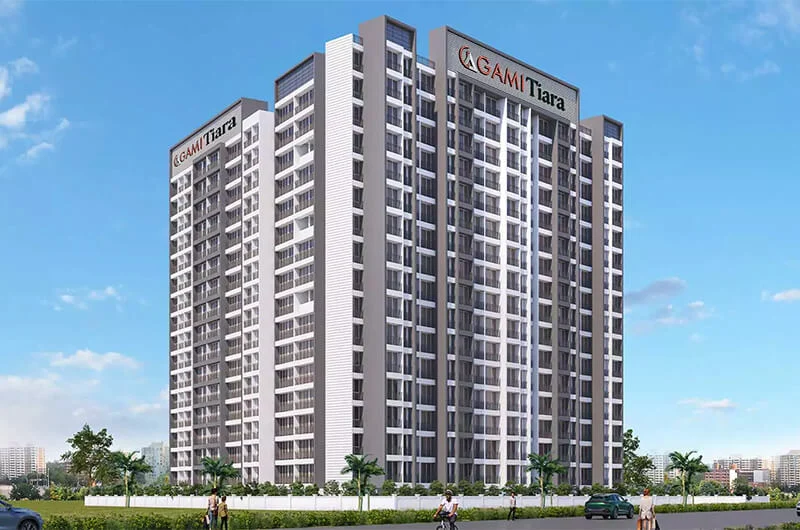
1 & 2 BHK flats in Taloja Navi Mumbai - Gami Tiara
New LaunchTaloja

Gami Group

Gami Tiara

1 & 2 BHK homes in Taloja. Carpet 350 - 437 sq.ft. Possession Dec 2026.

  • 1 & 2 BHK
  • Rs. 35 L - 44 L
  • MahaRERA: P52000052631
View details
1 & 2 BHK flats in Taloja Navi Mumbai - Prakriti Park
Under ConstructionTaloja

Khwaish Enterprises

Prakriti Park

1 & 2 BHK homes in Taloja. Carpet 437 - 635 sq.ft. Possession Dec 2026.

  • 1 & 2 BHK
  • Rs. 37 L - 56 L
  • MahaRERA: P52000008575
View details
1 & 2 BHK flats in Taloja Navi Mumbai - Arihant Anaika
Under ConstructionTaloja

Arihant Superstructures Ltd

Arihant Anaika

1 & 2 BHK homes in Taloja. Carpet 434 - 560 sq.ft. Possession Dec 2028.

  • 1 & 2 BHK
  • Rs. 36 L - 54 L
  • MahaRERA: P52000029482
View details
1 & 2 BHK flats in Taloja Navi Mumbai - Mahaavir Amber
Under ConstructionTaloja

Mahaavir Superstructures Ltd

Mahaavir Amber

1 & 2 BHK homes in Taloja. Carpet 384 - 523 sq.ft. Possession Dec 2027.

  • 1 & 2 BHK
  • Rs. 39.9 L - 52 L
  • MahaRERA: P52000080039
View details
EditRelated Localities

Related localities.

Use these pages to compare the surrounding micro-markets.

Upper Kharghar

Property in Upper Kharghar

Emerging residential belt offering Kharghar-adjacent lifestyle at significantly lower entry prices

PositioningEmerging belt
Buyer intentFirst home + growth
Buying lensValue per rupee
  • The core argument for Upper Kharghar is straightforward: buy at a price point that reflects today's infrastructure stage, and benefit as that infrastructure matures. Multiple projects in Upper Kharghar are priced between Rs. 38 lakh and Rs. 83 lakh - a range that is increasingly rare in well-connected parts of Navi Mumbai. As connectivity improves and social infrastructure fills in, the appreciation potential in this belt is significant.
  • Buyers looking for their first home in Navi Mumbai, or investors seeking high appreciation from a relatively low base, will find Upper Kharghar worth serious consideration.
Explore Upper Kharghar
Panvel

Property in Panvel

Navi Mumbai's fastest-appreciating node, supercharged by the Navi Mumbai International Airport and MTHL - the city's most compelling investment destination

PositioningAirport-led growth
Buyer intentInvestor + commuter
Buying lensHigh appreciation
  • Panvel offers a rare combination: the growth momentum of an emerging market with the connectivity of an established one. The Panvel Railway Junction connects to CSMT via the Harbour Line and to Pune via the Deccan Express corridor. The Mumbai-Pune Expressway starts near Panvel. The Atal Setu (MTHL) puts South Mumbai 20-45 minutes away by car. And the Panvel-Karjat Rail Corridor, approximately 67% complete as of early 2026, will slash commute times further when operational.
  • For investors, new project launches in Panvel have been moving faster than pre-2020 levels according to local market observers. Budget segments starting below Rs. 40 lakh and mid-range options between Rs. 55 lakh and Rs. 1 crore are attracting buyers from across Mumbai and the diaspora. Township-format projects like Sai World City offer complete lifestyle ecosystems within the Panvel zone.
Explore Panvel
Taloja

Property in Taloja

Affordable, metro-connected, high-upside investment locality - Navi Mumbai's best value proposition for budget buyers

PositioningAffordable growth node
Buyer intentBudget + investor
Buying lensMetro upside
  • Taloja's investment case rests on three pillars: price, metro, and time. At current per sq ft rates of approximately Rs. 5,500 to Rs. 7,500, Taloja is underpriced relative to its connectivity trajectory. Metro Line 1's Pendhar terminus serves the Kharghar-Taloja belt, and the planned extension toward Khandeshwar will further reduce commute times to Belapur CBD, Mumbai Harbour Line stations, and ultimately the airport.
  • Market analysts tracking Navi Mumbai price movements note that Taloja's rate trajectory is likely to steepen once metro expansion reaches Phase 2 completion. Buyers who enter now are positioned ahead of that pricing shift.
  • For end-users, Taloja is a growing neighbourhood with improving civic amenities, CIDCO-planned roads, and increasing developer activity bringing newer, better-specified residential buildings.
Explore Taloja
EditRelated News

Recent reads.

A few useful updates if you want more context.

EditRelated Guides

Guides worth reading next.

A few more guide-led comparisons if you want to keep narrowing the shortlist.

Budget GuideGuide

2 BHK flats under 1 crore near Navi Mumbai Airport

A budget-led guide for buyers searching for 2 BHK homes under Rs. 1 crore in airport-influenced Navi Mumbai corridors.

Open guide
Budget GuideGuide

Affordable Flats in Navi Mumbai Under Rs. 60 Lakhs: Best Options in 2026

A 2026 affordability guide for buyers looking for Navi Mumbai flats under Rs. 60 lakh, with the best value pockets, practical compromises, and shortlist rules.

Open guide
Budget GuideGuide

Best 2 BHK under 1.5 Cr in Navi Mumbai

A budget-led 2 BHK guide for buyers trying to stay under Rs. 1.5 crore without giving up too much on locality fit or project quality.

Open guide
EditGuide FAQs

Quick questions, answered clearly.

Straight answers collected from the guide's buyer questions in one quick scan.

Which is the cheapest area in Navi Mumbai to buy a flat?

Among planned, metro-connected nodes, Taloja generally sits at or near the bottom. Kalamboli and the Panvel periphery follow, with Dronagiri and Uran cheaper still but priced on future infrastructure rather than present liveability.

Is buying in the cheapest area a good idea?

Only if you understand why it is cheap. Discounts caused by immaturity can close as infrastructure arrives; discounts caused by an industrial estate or freight junction are structural and will still be there when you sell.

Is Taloja or Kalamboli cheaper?

The two sit close together at the lower end. Taloja is priced down by the MIDC estate and social infrastructure density, Kalamboli by heavy commercial traffic from the steel market and the junction.

What extra risks come with cheap property?

Transaction costs form a larger share of a small purchase, financing is harder on older buildings and unusual title categories, and thin markets are harder to exit at a fair price if you need to sell.

Should I buy the cheapest flat I can find?

Usually not. The gap between the cheapest and second-cheapest option is often small while the difference in daily life is large, so spending modestly more for a materially better address within the same belt is frequently the better outcome.

What each node gives up

Taloja gives up air quality in specific pockets and social infrastructure density everywhere. Our Taloja pros and cons covers how much that varies by sector.

What low entry prices cost you elsewhere

Transaction costs form a larger proportion of a small purchase. Stamp duty, registration, transfer charges and any renovation reserve are broadly fixed as a percentage or an amount, so on a low base they bite harder. Our note on the hidden costs of buying a flat covers what to budget.

How to buy well at the bottom of the ladder

Insist on MahaRERA registration for anything under construction. The proportion of loosely documented inventory rises as prices fall, and registration is the single most effective filter. Our MahaRERA explainer sets out what it does and does not cover.

Want help turning this into a shortlist?

Share your brief and Basaao will help you compare the right next options.

Contact Basaao
CallWhatsApp