Navi Mumbai Metro Line 2: Taloja to Khandeshwar
Metro Line 1 runs and its Pendhar terminus has already changed how Taloja is priced. The proposed extensions beyond it — including the corridor towards Khandeshwar — are a different matter entirely: planned rather than running, and quoted in sales offices with a confidence the actual status does not support. Here is how to think about buying near a line that does not exist yet.
What is actually operational on the Navi Mumbai metro today?
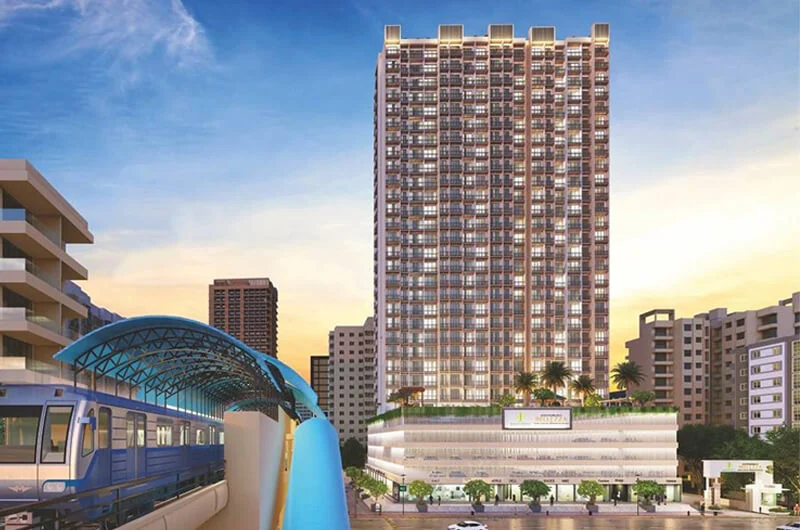
Metro Line 1, running between Belapur and Pendhar, is the operational corridor. Its Pendhar terminus sits on the Taloja side, which is why Taloja Phase 2 projects reference metro proximity while much of the node does not.
Everything beyond that — extensions towards Khandeshwar, further connections into the wider network — sits in the planned or proposed category rather than the operational one.
That distinction is the whole point of this guide. An operational line changes your commute today; a planned line changes your commute on a date nobody can currently give you.
How do you verify the status of a proposed metro line?
Go to the implementing authority rather than to a sales office, a news aggregator or a WhatsApp forward. For Navi Mumbai metro corridors that means CIDCO and the relevant state transport bodies, whose published positions are the only ones worth acting on.
- Check the implementing authority's own published status and any tender or contract announcements.
- Distinguish clearly between proposed, sanctioned, funded, under construction and operational — these are very different stages.
- Ask a sales team which stage the line is at and watch how precisely they can answer.
- Look for physical evidence: land acquisition, site works, pillars. A corridor under construction looks like one.
- Treat any specific opening year quoted to you as a claim to verify, not a fact.
Should you pay a premium for a proposed metro corridor?
No — and this is one of the few places where a flat answer is justified. A premium paid today for infrastructure that arrives in an unknown year transfers your entire upside to the seller.
Infrastructure-led buying works when you buy something that stands up on today's fundamentals and treat the future line as optionality. It fails when the line is the reason for the purchase, because you are then exposed to a timeline you do not control and cannot verify.
The pattern repeats across Navi Mumbai, which is why the Navi Mumbai investment guide treats infrastructure as one input among several rather than as the thesis.
Which areas would a Taloja-Khandeshwar corridor affect?
The belt between the existing Pendhar terminus and the Khandeshwar side, which brings parts of Taloja, the Panvel approach and the Khandeshwar pocket into a single connected corridor if and when it is delivered.
Khandeshwar already has rail connectivity and sits within the airport-influenced belt, so a metro connection would add to an existing story rather than create one from nothing — which is generally a better setup than a corridor whose only asset is the plan.
Current inventory in these belts is worth browsing on today's merits: the Taloja shelf, the Khandeshwar shelf and the Panvel shelf.
What is the sensible way to buy near a metro corridor?
Buy where the trains already run if transit access is what you are paying for, and buy on fundamentals everywhere else.
That means the operational Line 1 catchment carries a real, verifiable daily-use advantage, while the proposed corridors carry an unpriced option that you should not pay much for. The best localities near Metro Line 1 guide covers the first case in detail.
If a project's entire pitch collapses when you remove the proposed line from it, that tells you what you are actually being sold. Ask Basaao if you want a shortlist assessed on what exists rather than on what is announced.