Navi Mumbai as a data centre hub: what it means for property

Navi Mumbai has become one of India's most important data centre locations, and the fact now appears in a great deal of property marketing. The underlying story is genuine. The property implications are narrower and more specific than most of that marketing suggests, and worth separating carefully.

Why the industry concentrated here

Data centres follow a short list of requirements, and the Mumbai region satisfies them unusually well. Submarine cables carrying international internet traffic land on this coast, which makes latency to global networks lower here than almost anywhere else in India.

Land availability and power infrastructure are the second factor, and this is where Navi Mumbai specifically wins over Mumbai proper. Large contiguous plots with industrial power provision exist here and do not in the island city.

Planned industrial zoning is the third. The MIDC belts and CIDCO's industrial allocations gave operators sites that were already designated for this kind of use, removing years of approval risk.

The result is a genuine cluster spanning the Airoli and Mahape belt in the north and the Panvel corridor in the south, with major facilities operating rather than announced.

  • Submarine cable landings giving low international latency
  • Large plots with industrial power provision
  • Pre-designated industrial zoning through MIDC and CIDCO
  • Operating facilities rather than announcements

What data centres do and do not create

This is the part most property marketing gets wrong, and it matters for anyone buying on the strength of it.

Data centres are capital-intensive and employment-light. A facility representing an enormous investment may employ a few hundred people directly, most of them specialist technical and security staff. Compared with an IT campus of similar footprint, the residential demand generated is a fraction.

What they do create is a durable commercial anchor. Operators sign very long leases and their facilities do not relocate, which stabilises the surrounding industrial land market and supports ancillary services.

They also attract adjacent activity over time: network operators, cloud service providers and increasingly the AI compute businesses that need to sit near the same infrastructure. That secondary effect is where the real employment growth may eventually come from.

Where the residential effect is genuine

The clearest beneficiaries are the northern nodes around Airoli, Ghansoli and Mahape, where the data centre cluster sits alongside an already substantial IT and corporate belt. There, the effect is additive to demand that already exists.

In the Panvel corridor the picture is different. Facilities there are larger and newer, but the surrounding residential demand is driven far more by the airport and by Panvel's own economy than by data centre employment.

The honest reading is that data centres are a supporting factor in the north and a marginal one in the south, in both cases behind the primary drivers. Our guides to Airoli and Ghansoli cover those corridors properly.

How the claim gets overstated

The most common overstatement is treating a large investment figure as though it were a large employment figure. They are not related in this industry, and a project marketed on the size of a nearby data centre investment is using a number that does not translate into tenants or buyers.

The second is geographic stretching. A facility fifteen kilometres away has no meaningful effect on a residential project, however impressive it sounds in a brochure.

The third is timeline compression. Where secondary employment does follow, it builds over years. Pricing that assumes the mature version has already arrived is pricing in something that has not happened.

A useful test is to ask how many people the facility employs and where they actually live. If the answer is not readily available, the claim is decoration.

  • Investment size is not employment size in this industry
  • Distance matters: fifteen kilometres away is not a local effect
  • Secondary employment builds over years, not quarters

The genuine long-term case

The strongest argument is not employment at all. It is that a data centre cluster anchors a region's position in an industry that is growing quickly and cannot easily relocate, which supports the broader commercial and industrial ecosystem around it.

Compute demand driven by AI workloads is expanding the sector, and facilities cluster near existing infrastructure rather than starting fresh elsewhere. That gives the Navi Mumbai cluster a durable advantage.

For a residential buyer, the practical implication is modest but real: nodes near the cluster have an additional, stable source of economic activity that does not depend on Mumbai's own trajectory. That is worth something in a region where most demand narratives ultimately trace back to Mumbai.

How to use this when buying

Treat it as a supporting reason rather than a primary one. If a node works on commute, price and liveability, cluster proximity is a reasonable tiebreaker. If it does not, no amount of nearby compute capacity fixes it.

Weight the northern corridor higher on this factor than the southern, because that is where the cluster sits alongside employment that actually generates residential demand.

Be sceptical of any project marketed primarily on data centre proximity. That framing usually indicates the project lacks a stronger case, which is itself useful information.

For comparison against the airport story, which is a genuinely larger residential driver, our guide to airport catchment localities sets out where that effect actually reaches.

  • A tiebreaker, not a primary reason to buy
  • Weight it higher in the northern corridor than the south
  • Projects marketed mainly on this usually lack a stronger case

A short verdict

Navi Mumbai's position as a data centre hub is real, durable and likely to grow, and it is a genuine strength for the region's long-term economic base.

Its direct residential impact is small, because the industry employs few people relative to its capital intensity. Its indirect impact through adjacent industries may become significant, but that has not happened yet.

For a buyer, the sensible position is to be pleased that the cluster exists and to decline to pay a premium for proximity to it. Those two things are entirely compatible, and the difference between them is worth a good deal of money.
EditRelated Properties

Projects worth exploring.

If this theme fits your search, start here.

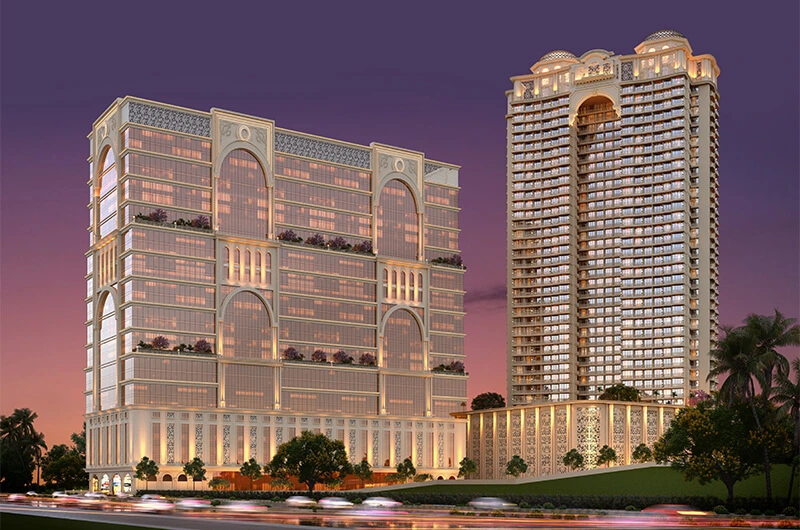
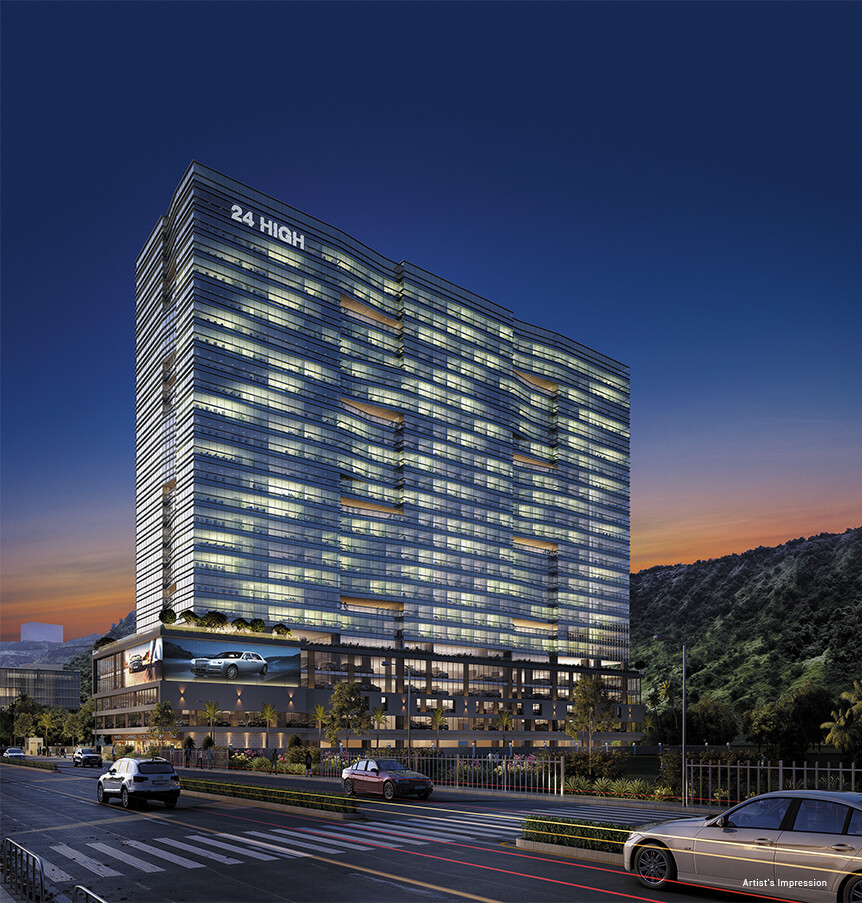
Office Spaces & Retail Shops in Nerul Navi Mumbai - 24 High
Under ConstructionNerul

Dream Apex Realities Limited

24 High

Commercial office spaces and retail units opposite DY Patil Stadium in Nerul. Carpet 430 - 820 sq.ft. Possession Apr 2026.

  • Office Spaces & Retail Shops
  • Rs. 92 L - 1.74 Cr
  • MahaRERA: P51700025150
View details
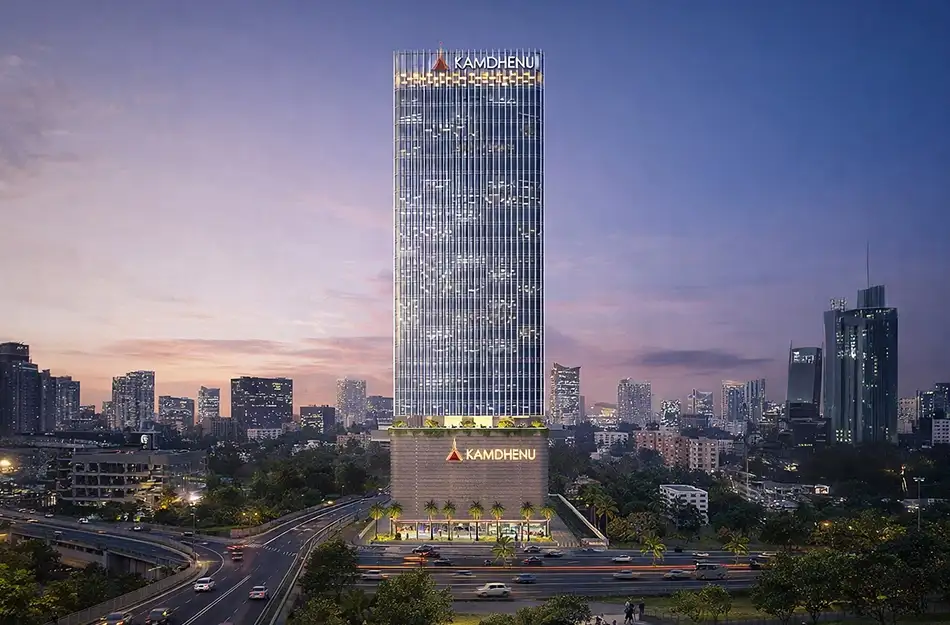
Premium Offices & High-Street Retail in Nerul Navi Mumbai - Kamdhenu Zeus
New LaunchNerul

Kamdhenu Builders & Developers

Kamdhenu Zeus

Launch-stage commercial tower with premium offices and retail in Shiravane, Nerul. Carpet 484 - 1587 sq.ft. Possession Dec 2030.

  • Premium Offices & High-Street Retail
  • Rs. 1.25 Cr - 2.38 Cr
  • MahaRERA: PC1330002500481
View details
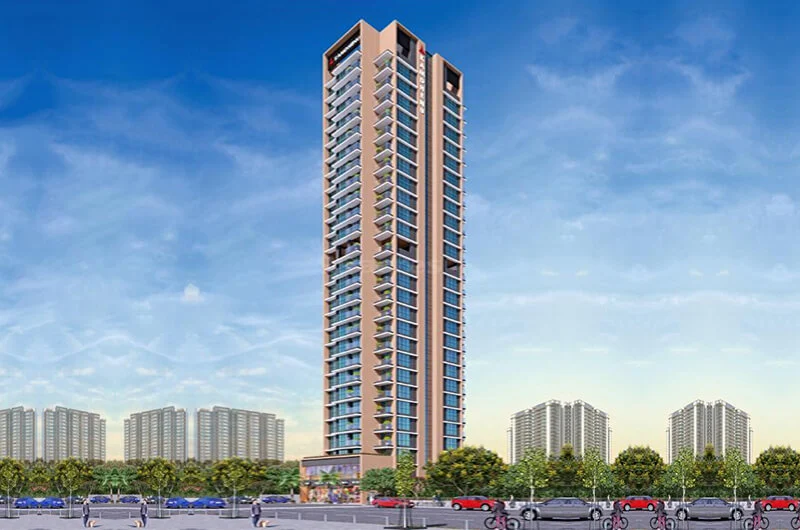
2 & 3 BHK flats in Nerul Navi Mumbai - Sai World One
New LaunchNerul

Paradise Group

Sai World One

2 & 3 BHK homes in Nerul. Carpet 860 - 1290 sq.ft. Possession Dec 2029.

  • 2 & 3 BHK
  • Rs. 1.80 Cr - 2.70 Cr
  • MahaRERA: Awaited
View details
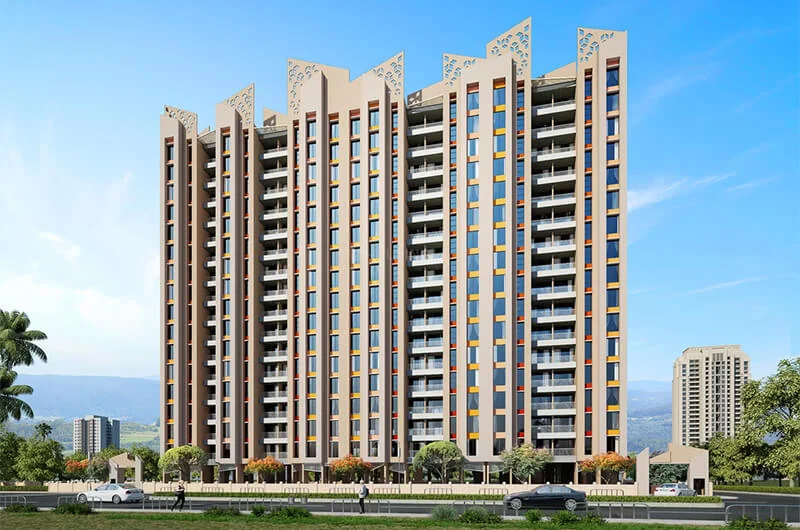
1 & 2 BHK flats in Panvel Navi Mumbai - Today Saubhagyam
Under ConstructionPanvel

Today Group

Today Saubhagyam

1 & 2 BHK homes in Panvel. Carpet 436 - 580 sq.ft. Possession Dec 2028.

  • 1 & 2 BHK
  • Rs. 46 L - 69 L
  • MahaRERA: P52000053782
View details
2 & 3 BHK flats in Nerul Navi Mumbai - Platinum Oakwoods
Under ConstructionNerul

Platinum Group

Platinum Oakwoods

2 & 3 BHK homes in Nerul. Carpet 850 - 2183 sq.ft. Possession Dec 2027.

  • 2 & 3 BHK
  • Rs. 2.35 Cr - 7.26 Cr
  • MahaRERA: P51700079286
View details
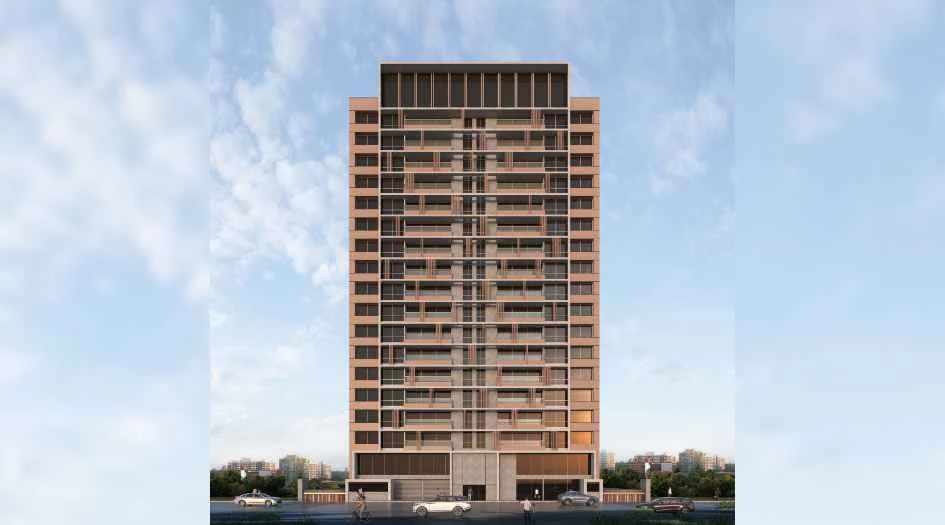
2 BHK flats in Nerul Navi Mumbai - Kamdhenu Zenith
Under ConstructionNerul

Kamdhenu Builders & Developers

Kamdhenu Zenith

2 BHK homes in Nerul. Carpet 677 sq.ft. Possession Dec 2028.

  • 2 BHK
  • Rs. 1.69 Cr
  • MahaRERA: PM1330002400003
View details
EditRelated Localities

Related localities.

Use these pages to compare the surrounding micro-markets.

Nerul

Property in Nerul

Mature, premium Navi Mumbai node - established social infrastructure, strong rail connectivity, aspirational address

PositioningEstablished premium
Buyer intentPremium end-use
Buying lensMature living
  • Nerul's appeal centres on its completeness as a neighbourhood. Every category of social infrastructure - from schools like DAV Public School and Apeejay School, to hospitals, to well-stocked commercial markets and malls - is available and functioning at a mature level. Residents do not need to travel to other nodes for daily needs. That convenience, rare in even the best planned cities, commands a consistent premium in Nerul's property market.
  • New project launches in Nerul are genuinely rare, which means that when quality projects do come to market here, they attract strong demand from informed buyers. Today Nova Vista is one such project - a premium development in a locality where scarcity of new inventory is itself a pricing support.
Explore Nerul
Panvel

Property in Panvel

Navi Mumbai's fastest-appreciating node, supercharged by the Navi Mumbai International Airport and MTHL - the city's most compelling investment destination

PositioningAirport-led growth
Buyer intentInvestor + commuter
Buying lensHigh appreciation
  • Panvel offers a rare combination: the growth momentum of an emerging market with the connectivity of an established one. The Panvel Railway Junction connects to CSMT via the Harbour Line and to Pune via the Deccan Express corridor. The Mumbai-Pune Expressway starts near Panvel. The Atal Setu (MTHL) puts South Mumbai 20-45 minutes away by car. And the Panvel-Karjat Rail Corridor, approximately 67% complete as of early 2026, will slash commute times further when operational.
  • For investors, new project launches in Panvel have been moving faster than pre-2020 levels according to local market observers. Budget segments starting below Rs. 40 lakh and mid-range options between Rs. 55 lakh and Rs. 1 crore are attracting buyers from across Mumbai and the diaspora. Township-format projects like Sai World City offer complete lifestyle ecosystems within the Panvel zone.
Explore Panvel
Juinagar

Property in Juinagar

Well-connected, undervalued mid-premium node - Navi Mumbai's hidden value for discerning long-term buyers

PositioningUndervalued connector
Buyer intentValue-led end-use
Buying lensConnectivity value
  • The core advantage of Juinagar is its railway connectivity. The Trans-Harbour Line station at Juinagar provides direct train services to Thane and onward connections to Mumbai. Combined with road access to the Sion-Panvel Highway and proximity to Nerul's developed commercial zone, Juinagar is not an isolated residential pocket - it is a well-connected node that has simply remained below the radar of many buyers.
  • Raheja Jade City, the flagship project in Juinagar featured on Basaao, brings K Raheja Corp's development quality to this node - a developer with a strong track record of delivery in the Mumbai region. This combination of developer credibility and locality upside is what makes Juinagar worth including in any serious Navi Mumbai property shortlist.
Explore Juinagar
EditRelated News

Recent reads.

A few useful updates if you want more context.

EditRelated Guides

Guides worth reading next.

A few more guide-led comparisons if you want to keep narrowing the shortlist.

Investment GuideGuide

Buying office space in Navi Mumbai: how it differs

Commercial purchases work differently from residential: loan terms, GST, lease structures, tenant covenant and the diligence that residential buyers never encounter.

Open guide
Investment GuideGuide

Commercial Property Investment in Kharghar

Whether Kharghar is a sensible commercial property bet in 2026, where the tracked office inventory actually sits, and how to judge the opportunity.

Open guide
Investment GuideGuide

Fractional ownership of property: how it works and who it suits

What fractional real estate platforms offer, how regulation has changed, the risks that differ from owning outright, and when it is the wrong answer.

Open guide
EditGuide FAQs

Quick questions, answered clearly.

Straight answers collected from the guide's buyer questions in one quick scan.

Does Navi Mumbai's data centre industry increase property prices?

Only marginally and indirectly. Data centres are capital-intensive but employment-light, so they generate far less residential demand than an IT campus of similar size. Their real value is anchoring the regional commercial ecosystem.

Why are data centres concentrated in Navi Mumbai?

Submarine cables carrying international traffic land on this coast, giving low latency, and the region offers large plots with industrial power provision and pre-designated MIDC and CIDCO zoning that Mumbai proper cannot match.

Which Navi Mumbai areas benefit most from the data centre cluster?

The northern belt around Airoli, Ghansoli and Mahape, where the cluster sits alongside an established IT and corporate base. In the Panvel corridor the airport and the local economy are far larger residential drivers.

Should I buy property because of a nearby data centre?

Not as a primary reason. Treat it as a tiebreaker between nodes that already work on commute, price and liveability. Projects marketed mainly on data centre proximity usually lack a stronger case.

How is the data centre claim usually overstated?

By presenting investment size as though it were employment size, by stretching geography so a distant facility appears local, and by pricing in secondary employment that would take years to arrive.

Why the industry concentrated here

Data centres follow a short list of requirements, and the Mumbai region satisfies them unusually well. Submarine cables carrying international internet traffic land on this coast, which makes latency to global networks lower here than almost anywhere else in India.

What data centres do and do not create

This is the part most property marketing gets wrong, and it matters for anyone buying on the strength of it.

How the claim gets overstated

The most common overstatement is treating a large investment figure as though it were a large employment figure. They are not related in this industry, and a project marketed on the size of a nearby data centre investment is using a number that does not translate into tenants or buyers.

How to use this when buying

Treat it as a supporting reason rather than a primary one. If a node works on commute, price and liveability, cluster proximity is a reasonable tiebreaker. If it does not, no amount of nearby compute capacity fixes it.

Want help turning this into a shortlist?

Share your brief and Basaao will help you compare the right next options.

Contact Basaao
CallWhatsApp