Property Appreciation in Taloja: The 5-Year View
Taloja is the node people point to when they want to argue that Navi Mumbai's outer belts deliver outsized returns. Sometimes that argument holds and sometimes it is survivorship bias with a metro station attached. What is more useful than a percentage is understanding what actually moved this market, because those same forces determine whether there is anything left to capture.
What has driven Taloja's price movement?
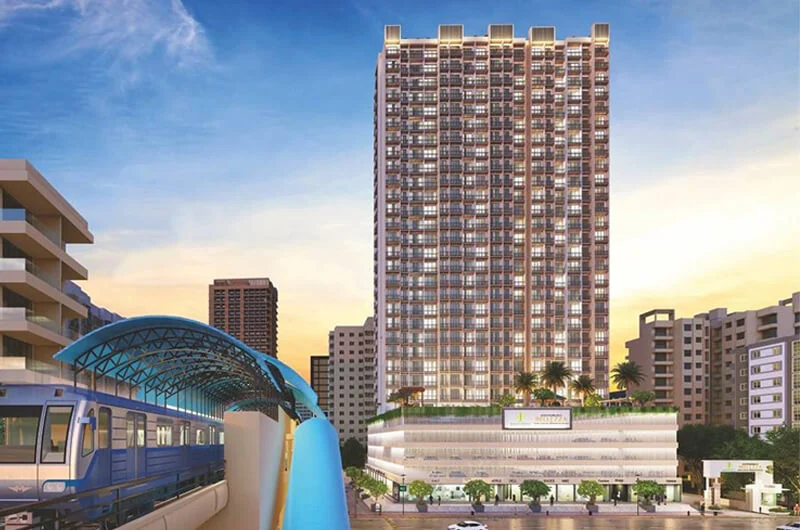
Two things above all: Metro Line 1 reaching the Pendhar end of the node, and sustained affordability pressure pushing budget buyers outward from Kharghar and the established core.
The metro mattered more than the raw distance suggests, because it changed Taloja's category. A node that was previously chosen only on price acquired a genuine infrastructure reason to be chosen, and that reframing tends to move markets more than incremental improvement does.
Underneath that sits volume. Taloja absorbed a large amount of new supply over this period, which kept it visible in search results and kept price discovery active rather than thin.
Why do appreciation claims about Taloja vary so widely?
Because the node has a wide internal spread and people quote whichever part supports their argument. The Pendhar metro side and the deeper Koyana Velhe pockets have not behaved the same way.
Entry-level compact stock and larger 2 BHK inventory have also diverged, since they serve different buyers with different constraints. A percentage derived from one segment says little about the other.
The honest approach is to compare specific projects over specific periods rather than to accept a node-wide figure. Basaao tracks current pricing per project on the Taloja shelf, which is a better starting point than any headline number.
Is there still appreciation left in Taloja?
Probably, but less of the easy kind. The metro repricing has substantially happened, which usually means the remaining upside depends on slower drivers: social infrastructure filling in, the proposed corridor extensions materialising, and continued affordability pressure elsewhere.
That points to a different kind of return — steadier, slower, and more dependent on the node genuinely maturing than on a single catalyst arriving. Investors expecting a repeat of the metro-era jump are likely to be disappointed on timing.
It also means entry price matters more than it did. When a market is being repriced, mistakes get absorbed; when it is consolidating, they do not. The hidden costs guide covers the part of your entry price you actually control.
How does Taloja compare with Upper Kharghar and Panvel?
Taloja has the transit advantage, Upper Kharghar has the association with a stronger node, and Panvel has the airport corridor and the deepest supply of large-format projects. All three compete for the same budget-conscious buyer.
On pure entry price, Taloja and Upper Kharghar sit closest to each other, with Taloja generally a little lower. Panvel is more varied, spanning entry stock and crore-plus township inventory in the same node.
Compare them directly rather than sequentially: the Taloja versus Upper Kharghar comparison and the Panvel property rates guide cover the two alternatives.
What should an investor expect from Taloja now?
A long hold, modest rental income, and returns that depend on the node maturing rather than on a catalyst. That is a legitimate investment, just not an exciting one.
- Plan for a full property cycle rather than a few years; thin resale markets punish short holds.
- Do not assume rent will cover the EMI — Taloja's rental market is not deep enough to rely on.
- Prefer the pockets with real daily-use infrastructure over the cheapest available plot.
- Weigh appreciation against rental yield rather than assuming one is the whole return.
- Read the Taloja investment guide for the node-level case before committing.