Pros and cons of living in Kharghar

Kharghar is the Navi Mumbai node most often recommended and least often examined. Most accounts of it read like a brochure. This one is meant to be usable: what actually works day to day, what residents complain about after a year, and which buyers should look elsewhere.

What genuinely works

The green space is real and it is unusual. Central Park is large enough to function as a proper civic amenity rather than a landscaped strip, and the hills behind the node give it an outlook that no other Navi Mumbai belt has. Residents who move away frequently name this as the thing they miss.

The metro is the second. Navi Mumbai Metro Line 1 runs through the node, and unlike most transport in the region it is operational rather than promised. It connects into the harbour line at Belapur, which makes a Mumbai commute workable without a car.

Social infrastructure is the third and the most underrated. Schools across boards, hospitals, coaching centres and retail all exist at density here. For a family, this is the difference between a node you live in and one you drive out of every weekend.

The fourth is planning. Kharghar was laid out on the CIDCO sector grid with wide internal roads and generous plot sizes, and it has aged into that rather than being retrofitted around it.

  • Central Park and the hills as genuine, large-scale green space
  • An operational metro with a harbour-line interchange at Belapur
  • Schools, healthcare and retail at real density
  • CIDCO sector planning with wide roads and generous layouts

What residents actually complain about

Distance is the first. Kharghar is spread out, and daily life often requires a vehicle in a way that denser nodes do not. Buyers arriving from Mumbai suburbs, where everything is walkable, consistently underestimate this.

The Mumbai commute is the second. The metro helps, but the interchange at Belapur adds time, and a south Mumbai journey from Kharghar remains long. Residents who work in Nariman Point or Lower Parel tend to be the least happy here.

Construction is the third. Large parts of the node, particularly towards Upper Kharghar, remain active building sites, and living beside one for several years is a real cost that no listing mentions.

The fourth is price. Kharghar is the most expensive node in the metro belt, and residents frequently note that the same money would have bought considerably more space in Panvel or Taloja. Our note on whether Kharghar is overpriced works through when that trade holds.

Who Kharghar suits best

Families with school-age children, because the school and healthcare density removes a problem that newer nodes take a decade to solve.

Anyone working in the Kharghar or Taloja corridor, including the corporate park catchment, for whom the commute question largely disappears.

Buyers who value environment over floor area, and who would rather have the park and the hills than an extra bedroom further out.

Buyers who want to stop moving. Kharghar is a node people settle in rather than pass through, and much of its value is in not having to do this again in five years.

Who should look elsewhere

Daily south Mumbai commuters. The journey is long enough that it will shape your life, and the harbour-line nodes from Vashi to Nerul serve that need far better even at a higher price per square foot.

Buyers whose priority is space per rupee. Taloja, Panvel and Upper Kharghar all deliver materially more carpet area at the same number, and if room to live in is the constraint, that matters more than amenity.

Anyone who wants a walkable, dense neighbourhood. Kharghar is planned around vehicles and open space, which is a genuine preference difference rather than a flaw.

Investors chasing appreciation. Most of the metro and corporate park story is already in the price, so the headroom sits in nodes where infrastructure is arriving rather than arrived.

  • Daily south Mumbai commuters: consider Vashi to Nerul instead
  • Space-per-rupee buyers: Taloja, Panvel, Upper Kharghar
  • Walkability seekers: Kharghar is planned around vehicles
  • Appreciation investors: much of the story is already priced

The sector question

Living in Kharghar is not one experience, and the sector changes it more than the building does. Proximity to the metro, to Central Park and to the Sion-Panvel highway all pull in different directions, and no sector is strong on all three.

Metro-adjacent sectors suit commuters and carry the clearest resale story. Park-adjacent sectors suit families and hold their premium well. Sectors away from both are where the value sits, at the cost of a longer leg to everything.

Buyers routinely choose a building first and discover the sector implications afterwards. Our Kharghar sector guide sets out how to work the other way round, which is the order that produces fewer regrets.

A practical way to decide

Spend a weekday evening in the node rather than a Sunday afternoon. Weekend Kharghar is at its best; a Tuesday at seven tells you about traffic, parking and whether the daily-needs layer near your building actually works.

Run the real commute in both directions before comparing any prices. This single test resolves most Kharghar decisions, because the node is either comfortably within reach of your work or it is not.

Then compare against the same budget elsewhere with verified inventory rather than impressions: flats in Kharghar under 1 crore and flats in Panvel under 1 crore is the comparison most buyers in this band should actually run.

The cost of living side

Buyers weigh the purchase price carefully and the running cost barely at all, which is a mistake in Kharghar specifically because several of them are higher here than in neighbouring nodes.

Maintenance charges in amenity-heavy societies are the largest. A township-style project with clubhouse, pool, gym and landscaped grounds carries a monthly cost that scales with those facilities, and over a decade it is a substantial number. Ask for the actual current figure rather than the launch estimate, which is routinely optimistic.

Transport is the second. Because the node is spread out, most households here run a vehicle where they might not in a denser belt, and fuel, parking and maintenance are a real ongoing addition.

Against that, some costs are lower. School and healthcare access without long travel saves both money and time, and the retail density means fewer trips out of the node than residents of newer belts make.

The honest summary is that Kharghar costs more to buy into and more to run, and delivers a correspondingly better daily experience. Whether that trade works is a budget question, not a taste question.
EditRelated Properties

Projects worth exploring.

If this theme fits your search, start here.

2, 3 & 4 BHK flats in Kharghar Navi Mumbai - Kasturi Regius Luxe
Under ConstructionKharghar

Kasturi Developers

Kasturi Regius Luxe

2, 3 & 4 BHK homes in Kharghar. Carpet 812 - 1945 sq.ft. Possession Dec 2027.

  • 2, 3 & 4 BHK
  • Rs. 1.62 Cr - 3.88
  • MahaRERA: P52000079465
View details
2 & 3 BHK flats in Kharghar Navi Mumbai - Bhagwati Avenoir
New LaunchKharghar

Bhagwati Developers

Bhagwati Avenoir

2 & 3 BHK homes in Kharghar. Carpet 804 - 1152 sq.ft. Possession Dec 2028.

  • 2 & 3 BHK
  • Rs. 1.65 Cr - 2 Cr
  • MahaRERA: Awaited
View details
2 & 3 BHK flats in Kharghar Navi Mumbai - Today Royal I Land 27
New LaunchKharghar

Today Royal Group

Today Royal I Land 27

2 & 3 BHK homes in Kharghar. Carpet 663 - 1308 sq.ft. Possession Dec 2030.

  • 2 & 3 BHK
  • Rs. 1.45 Cr - 2.85 Cr
  • MahaRERA: PR1270002501658
View details
2, 3 & 4 BHK flats in Upper Kharghar Navi Mumbai - Elara at Codename Cloud City
New LaunchUpper Kharghar

Today Group

Elara at Codename Cloud City

2, 3 & 4 BHK homes in Upper Kharghar. Carpet 1280 sq.ft. Possession Dec 2028.

  • 2, 3 & 4 BHK
  • Rs. 2 Cr
  • MahaRERA: P52000048037
View details
2, 3 & 4 BHK flats in Kharghar Navi Mumbai - Codename Showstopper
New LaunchKharghar

Metro Group & Satyam Developers

Codename Showstopper

2, 3 & 4 BHK homes in Kharghar. Carpet 950 - 2500 sq.ft. Possession Dec 2029.

  • 2, 3 & 4 BHK
  • Rs. 2.40 Cr - 5.50 Cr
  • MahaRERA: Awaited
View details
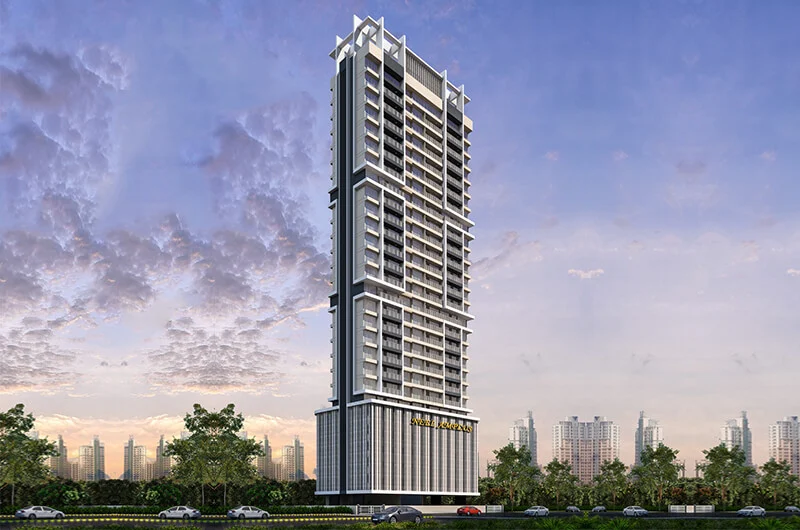
2 BHK flats in Kharghar Navi Mumbai - Neel Amplus
New LaunchKharghar

Neelkanth Enterprises

Neel Amplus

2 BHK homes in Kharghar. Carpet 644 sq.ft. Possession Dec 2030.

  • 2 BHK
  • Rs. 1.34 Cr
  • MahaRERA: PR1270002500127
View details
EditRelated Localities

Related localities.

Use these pages to compare the surrounding micro-markets.

Kharghar

Property in Kharghar

Premium residential node with metro access, green lifestyle, and strong social infrastructure - Navi Mumbai's most mature mid-premium market

PositioningPremium node
Buyer intentFamilies + upgraders
Buying lensLifestyle + stability
  • Kharghar's appeal is layered. At the foundation is its extraordinary physical infrastructure - wide CIDCO roads, reliable water supply, sector-wise power distribution, and a civic environment that feels planned rather than improvised. On top of that sits a rich social infrastructure: reputed schools including DPS Navi Mumbai and Ryan International, hospitals, the massive 85-acre Central Park (one of Asia's largest urban parks), an 18-hole golf course, and well-developed commercial zones.
  • Metro Line 1, operational since November 2023, now connects Kharghar directly to CBD Belapur and Pendhar, with future extensions planned toward Khandeshwar and ultimately the Navi Mumbai International Airport. Properties within a kilometre of Kharghar's metro stations have seen an estimated 15-20% appreciation premium since the metro's launch.
  • The Navi Mumbai International Airport, approximately 14 km from Kharghar, commenced commercial operations in December 2025 - adding a structural appreciation catalyst to a node that already had strong fundamentals.
Explore Kharghar
Upper Kharghar

Property in Upper Kharghar

Emerging residential belt offering Kharghar-adjacent lifestyle at significantly lower entry prices

PositioningEmerging belt
Buyer intentFirst home + growth
Buying lensValue per rupee
  • The core argument for Upper Kharghar is straightforward: buy at a price point that reflects today's infrastructure stage, and benefit as that infrastructure matures. Multiple projects in Upper Kharghar are priced between Rs. 38 lakh and Rs. 83 lakh - a range that is increasingly rare in well-connected parts of Navi Mumbai. As connectivity improves and social infrastructure fills in, the appreciation potential in this belt is significant.
  • Buyers looking for their first home in Navi Mumbai, or investors seeking high appreciation from a relatively low base, will find Upper Kharghar worth serious consideration.
Explore Upper Kharghar
Taloja

Property in Taloja

Affordable, metro-connected, high-upside investment locality - Navi Mumbai's best value proposition for budget buyers

PositioningAffordable growth node
Buyer intentBudget + investor
Buying lensMetro upside
  • Taloja's investment case rests on three pillars: price, metro, and time. At current per sq ft rates of approximately Rs. 5,500 to Rs. 7,500, Taloja is underpriced relative to its connectivity trajectory. Metro Line 1's Pendhar terminus serves the Kharghar-Taloja belt, and the planned extension toward Khandeshwar will further reduce commute times to Belapur CBD, Mumbai Harbour Line stations, and ultimately the airport.
  • Market analysts tracking Navi Mumbai price movements note that Taloja's rate trajectory is likely to steepen once metro expansion reaches Phase 2 completion. Buyers who enter now are positioned ahead of that pricing shift.
  • For end-users, Taloja is a growing neighbourhood with improving civic amenities, CIDCO-planned roads, and increasing developer activity bringing newer, better-specified residential buildings.
Explore Taloja
EditRelated News

Recent reads.

A few useful updates if you want more context.

EditRelated Guides

Guides worth reading next.

A few more guide-led comparisons if you want to keep narrowing the shortlist.

Lifestyle GuideGuide

Best Gated Communities in Panvel for Families

The township-scale gated communities in Panvel worth shortlisting, what they cost, and how to judge one before the later phases are built.

Open guide
Lifestyle GuideGuide

Living Near Central Park, Kharghar: Pros and Cons

What it is actually like to live near Kharghar's Central Park, what the address premium buys you, and when it is not worth paying.

Open guide
Lifestyle GuideGuide

Pros and cons of living in Panvel

What daily life in Panvel is actually like: the connectivity that makes it work, the spread that frustrates residents, and who the node suits.

Open guide
EditGuide FAQs

Quick questions, answered clearly.

Straight answers collected from the guide's buyer questions in one quick scan.

Is Kharghar a good place to live?

For families and anyone working in the Kharghar or Taloja corridor, yes: the green space, operational metro and school and healthcare density are genuine. For daily south Mumbai commuters and buyers optimising for floor area, other nodes serve better.

What do residents dislike about Kharghar?

That it is spread out and often needs a vehicle, that a south Mumbai commute stays long even with the metro, that active construction continues in large parts of the node, and that it costs more than neighbouring belts for less space.

Is Kharghar good for families?

It is one of the strongest family nodes in Navi Mumbai, because schools across boards, hospitals and retail already exist at density rather than being promised. Central Park adds usable open space that most nodes lack entirely.

Is Kharghar walkable?

Not especially. It was planned around vehicles and open space, with wide roads and generous plot sizes, so daily life often requires a car or auto. Buyers arriving from dense Mumbai suburbs consistently underestimate this.

Does the sector I choose in Kharghar matter?

More than the building does. Metro proximity, Central Park adjacency and highway access pull in different directions and no sector is strong on all three, so decide your priority before shortlisting buildings.

What genuinely works

The green space is real and it is unusual. Central Park is large enough to function as a proper civic amenity rather than a landscaped strip, and the hills behind the node give it an outlook that no other Navi Mumbai belt has. Residents who move away frequently name this as the thing they miss.

What residents actually complain about

Distance is the first. Kharghar is spread out, and daily life often requires a vehicle in a way that denser nodes do not. Buyers arriving from Mumbai suburbs, where everything is walkable, consistently underestimate this.

Want help turning this into a shortlist?

Share your brief and Basaao will help you compare the right next options.

Contact Basaao
CallWhatsApp