Raigad or Navi Mumbai: where does the value actually sit?

Buyers who find Navi Mumbai expensive often look further out into Raigad, where Karjat, Khopoli and the Alibaug belt offer dramatically lower prices. Some of that is genuine value. Much of it is a different asset class being compared as though it were the same one, and the distinction is worth drawing carefully.

These are not the same purchase

Navi Mumbai is a planned urban region where people live full time and commute to work. The outer Raigad belt is predominantly a second-home, weekend and long-horizon land market, with a much smaller full-time residential component.

That single difference explains most of the price gap. You are not getting the same thing cheaper; you are getting a different thing that happens to cost less.

Panvel and Uran technically fall within Raigad district, which confuses the comparison further. When buyers say Raigad in this context they usually mean the belt beyond Panvel: Karjat, Khopoli, Pen, Alibaug and the surrounding areas.

Establishing which of those you are actually comparing is the first step, because a Panvel purchase and a Karjat purchase have almost nothing in common.

  • Navi Mumbai: full-time urban residential with daily commuting
  • Outer Raigad: second homes, weekend use, long-horizon land
  • Panvel and Uran are in Raigad district but are a different market

What the outer Raigad belt genuinely offers

Space is the obvious one. Budgets that buy a compact flat in Kharghar buy considerably more in Karjat or Khopoli, including plot options that do not exist inside Navi Mumbai at any comparable price.

Environment is the second. The belt is greener, hillier and considerably less dense, which is precisely what second-home buyers are paying for.

Connectivity has genuinely improved. The Mumbai-Pune expressway serves the Khopoli side, the central railway serves Karjat, and the Atal Setu materially shortened access to the Alibaug direction. Our note on the Mumbai Trans Harbour Link covers that effect.

For a buyer who wants a weekend property within reach of Mumbai, this belt does something Navi Mumbai cannot.

What it does not offer

A daily commute to Mumbai is the main one. It is possible from parts of the belt and it is punishing, and buyers who plan to do it usually stop within a year.

Rental income is the second. Second-home markets have thin, seasonal rental demand and nothing resembling the steady salaried tenant base of an urban node. An investor modelling Navi Mumbai-style yields on a Karjat property is modelling something that does not exist.

Social infrastructure is the third. Schools, healthcare and everyday retail are considerably thinner, which matters enormously for a full-time family and not at all for a weekend owner.

Liquidity is the fourth and the most underestimated. Second-home markets are illiquid, and exit can take a long time at a price you did not want.

  • No workable daily Mumbai commute from most of the belt
  • Thin, seasonal rental demand rather than salaried tenants
  • Sparse schools, healthcare and everyday retail
  • Illiquid resale market with slow exits

The title question, which is the real risk

This is where outer Raigad differs most sharply from Navi Mumbai, and where buyers get into genuine trouble.

Navi Mumbai land is predominantly CIDCO-planned with a documented allotment chain. The Raigad belt has a much higher proportion of agricultural land, land subject to tenancy protections, ancestral holdings with multiple heirs, and conversion requirements that may or may not have been completed properly.

Agricultural land also cannot be purchased by everyone, and the rules on who may buy it are a common source of failed transactions. NRIs in particular cannot acquire agricultural land at all, as our guide to FEMA regulations sets out.

The practical advice is that title diligence in this belt needs a competent local property lawyer rather than reliance on a developer's assurances. That cost is not optional and it is small relative to what it protects.

Who should buy where

Buy in Navi Mumbai if you need a daily commute, want rental income, have school-age children, or may need to sell within a few years. All four point the same way.

Buy in outer Raigad if you want a weekend or retirement property, have a long horizon and no income requirement from the asset, and are buying with proper legal diligence rather than on price alone.

Buy in Panvel specifically if you want the price advantage of being at the edge of Navi Mumbai while keeping urban infrastructure, rail connectivity and a genuine rental market. For many buyers considering Raigad, Panvel is the answer they were actually looking for. Our Panvel pros and cons covers whether it fits.

Do not buy in outer Raigad expecting Navi Mumbai economics. That is the single most common and most expensive error in this comparison.

The investment case, honestly

The outer Raigad belt has genuinely benefited from improved connectivity, and land values in parts of it have moved substantially. That is real.

But land appreciation in a second-home belt is lumpy, slow and heavily dependent on the specific location and title quality. It is not comparable to the steadier, more liquid appreciation of urban residential property.

It also requires a long horizon and the ability to hold through periods where nothing happens at all. Buyers who need a defined exit timeline should not be in this market.

For most buyers the sensible position is that outer Raigad is a lifestyle purchase that may appreciate, not an investment that also provides a weekend house.

  • Connectivity gains are real and have moved land values
  • Appreciation is lumpy, slow and location-specific
  • Requires a long horizon and no exit deadline

If you are comparing on price alone

The honest advice is to compare within Navi Mumbai first. The gap between the region's cheapest and most expensive nodes is wide enough that most buyers who feel priced out have not yet exhausted the options.

Taloja, Kalamboli, Turbhe and the Panvel periphery all sit well below the Kharghar and Palm Beach belt while remaining urban, connected and liquid. Our note on the cheapest areas in Navi Mumbai covers what each gives up.

Only after that comparison is exhausted does moving out of the urban region make sense, and at that point you should be doing it because you want what Raigad offers, not because you want Navi Mumbai and cannot afford it.

EditRelated Properties

Projects worth exploring.

If this theme fits your search, start here.

1 & 2 BHK flats in Panvel Navi Mumbai - Today Saubhagyam
Under ConstructionPanvel

Today Group

Today Saubhagyam

1 & 2 BHK homes in Panvel. Carpet 436 - 580 sq.ft. Possession Dec 2028.

  • 1 & 2 BHK
  • Rs. 46 L - 69 L
  • MahaRERA: P52000053782
View details
1 & 2 BHK flats in Taloja Navi Mumbai - Geetanjali Bellezza
New LaunchTaloja

Siddharth Builders

Geetanjali Bellezza

1 & 2 BHK homes in Taloja. Carpet 441 - 711 sq.ft. Possession Dec 2030.

  • 1 & 2 BHK
  • Rs. 45 L - 75 L
  • MahaRERA: P52000079990
View details
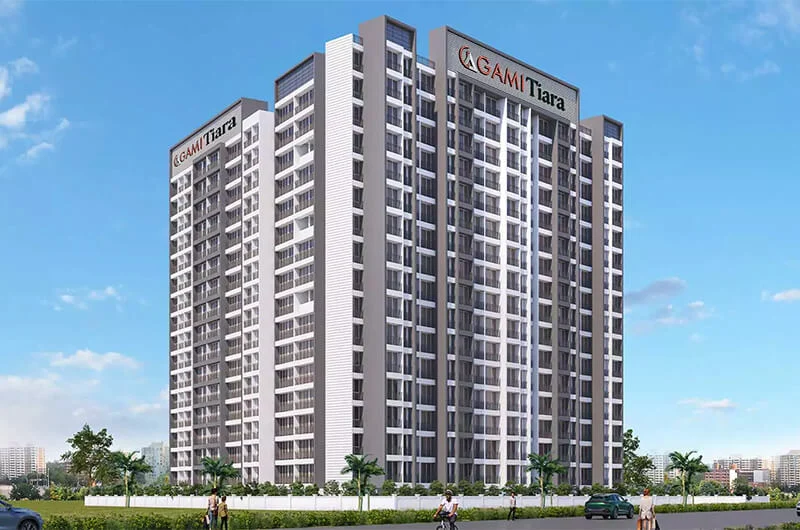
1 & 2 BHK flats in Taloja Navi Mumbai - Gami Tiara
New LaunchTaloja

Gami Group

Gami Tiara

1 & 2 BHK homes in Taloja. Carpet 350 - 437 sq.ft. Possession Dec 2026.

  • 1 & 2 BHK
  • Rs. 35 L - 44 L
  • MahaRERA: P52000052631
View details
1 & 2 BHK flats in Taloja Navi Mumbai - Prakriti Park
Under ConstructionTaloja

Khwaish Enterprises

Prakriti Park

1 & 2 BHK homes in Taloja. Carpet 437 - 635 sq.ft. Possession Dec 2026.

  • 1 & 2 BHK
  • Rs. 37 L - 56 L
  • MahaRERA: P52000008575
View details
1 & 2 BHK flats in Taloja Navi Mumbai - Arihant Anaika
Under ConstructionTaloja

Arihant Superstructures Ltd

Arihant Anaika

1 & 2 BHK homes in Taloja. Carpet 434 - 560 sq.ft. Possession Dec 2028.

  • 1 & 2 BHK
  • Rs. 36 L - 54 L
  • MahaRERA: P52000029482
View details
1 & 2 BHK flats in Taloja Navi Mumbai - Mahaavir Amber
Under ConstructionTaloja

Mahaavir Superstructures Ltd

Mahaavir Amber

1 & 2 BHK homes in Taloja. Carpet 384 - 523 sq.ft. Possession Dec 2027.

  • 1 & 2 BHK
  • Rs. 39.9 L - 52 L
  • MahaRERA: P52000080039
View details
EditRelated Localities

Related localities.

Use these pages to compare the surrounding micro-markets.

Kharghar

Property in Kharghar

Premium residential node with metro access, green lifestyle, and strong social infrastructure - Navi Mumbai's most mature mid-premium market

PositioningPremium node
Buyer intentFamilies + upgraders
Buying lensLifestyle + stability
  • Kharghar's appeal is layered. At the foundation is its extraordinary physical infrastructure - wide CIDCO roads, reliable water supply, sector-wise power distribution, and a civic environment that feels planned rather than improvised. On top of that sits a rich social infrastructure: reputed schools including DPS Navi Mumbai and Ryan International, hospitals, the massive 85-acre Central Park (one of Asia's largest urban parks), an 18-hole golf course, and well-developed commercial zones.
  • Metro Line 1, operational since November 2023, now connects Kharghar directly to CBD Belapur and Pendhar, with future extensions planned toward Khandeshwar and ultimately the Navi Mumbai International Airport. Properties within a kilometre of Kharghar's metro stations have seen an estimated 15-20% appreciation premium since the metro's launch.
  • The Navi Mumbai International Airport, approximately 14 km from Kharghar, commenced commercial operations in December 2025 - adding a structural appreciation catalyst to a node that already had strong fundamentals.
Explore Kharghar
Panvel

Property in Panvel

Navi Mumbai's fastest-appreciating node, supercharged by the Navi Mumbai International Airport and MTHL - the city's most compelling investment destination

PositioningAirport-led growth
Buyer intentInvestor + commuter
Buying lensHigh appreciation
  • Panvel offers a rare combination: the growth momentum of an emerging market with the connectivity of an established one. The Panvel Railway Junction connects to CSMT via the Harbour Line and to Pune via the Deccan Express corridor. The Mumbai-Pune Expressway starts near Panvel. The Atal Setu (MTHL) puts South Mumbai 20-45 minutes away by car. And the Panvel-Karjat Rail Corridor, approximately 67% complete as of early 2026, will slash commute times further when operational.
  • For investors, new project launches in Panvel have been moving faster than pre-2020 levels according to local market observers. Budget segments starting below Rs. 40 lakh and mid-range options between Rs. 55 lakh and Rs. 1 crore are attracting buyers from across Mumbai and the diaspora. Township-format projects like Sai World City offer complete lifestyle ecosystems within the Panvel zone.
Explore Panvel
Taloja

Property in Taloja

Affordable, metro-connected, high-upside investment locality - Navi Mumbai's best value proposition for budget buyers

PositioningAffordable growth node
Buyer intentBudget + investor
Buying lensMetro upside
  • Taloja's investment case rests on three pillars: price, metro, and time. At current per sq ft rates of approximately Rs. 5,500 to Rs. 7,500, Taloja is underpriced relative to its connectivity trajectory. Metro Line 1's Pendhar terminus serves the Kharghar-Taloja belt, and the planned extension toward Khandeshwar will further reduce commute times to Belapur CBD, Mumbai Harbour Line stations, and ultimately the airport.
  • Market analysts tracking Navi Mumbai price movements note that Taloja's rate trajectory is likely to steepen once metro expansion reaches Phase 2 completion. Buyers who enter now are positioned ahead of that pricing shift.
  • For end-users, Taloja is a growing neighbourhood with improving civic amenities, CIDCO-planned roads, and increasing developer activity bringing newer, better-specified residential buildings.
Explore Taloja
EditRelated News

Recent reads.

A few useful updates if you want more context.

EditRelated Guides

Guides worth reading next.

A few more guide-led comparisons if you want to keep narrowing the shortlist.

Comparison GuideGuide

Panvel or Taloja: the value-belt decision

Two of Navi Mumbai's most affordable planned nodes with very different characters. What each offers, where the risks sit, and who should choose which.

Open guide
Comparison GuideGuide

Plot or flat: which makes sense in Navi Mumbai

Buying land and building compared with buying a flat: financing, timelines, risk, liquidity and who each genuinely suits in this region.

Open guide
Comparison GuideGuide

Compare top property brokers in Navi Mumbai for buying residential flats

A buyer-oriented comparison of brokerage, portal, and zero-brokerage advisory models for Navi Mumbai residential flat searches.

Open guide
EditGuide FAQs

Quick questions, answered clearly.

Straight answers collected from the guide's buyer questions in one quick scan.

Is property in Raigad cheaper than Navi Mumbai?

Substantially, in the belt beyond Panvel. But it is a different asset: predominantly second-home and long-horizon land rather than full-time urban residential, so the price gap reflects a different product rather than better value for the same thing.

Can I commute daily to Mumbai from Karjat or Khopoli?

It is possible from parts of the belt and it is punishing. Most buyers who plan to do it stop within a year. If a daily Mumbai commute is a requirement, Navi Mumbai is the correct choice.

Is there rental income in the outer Raigad belt?

Very little, and what exists is seasonal second-home demand rather than a steady salaried tenant base. Modelling Navi Mumbai-style rental yields on a Karjat or Khopoli property is modelling something that does not exist there.

What is the biggest risk buying in Raigad?

Title. The belt has a high proportion of agricultural land, tenancy-protected holdings, ancestral property with multiple heirs and incomplete conversions. Use a competent local property lawyer rather than relying on developer assurances.

Can NRIs buy land in Raigad?

Not agricultural land, plantation property or farmhouses, which rules out a large share of what is available in the belt. NRIs may acquire residential and commercial property, so the specific land classification matters a great deal.

What the outer Raigad belt genuinely offers

Space is the obvious one. Budgets that buy a compact flat in Kharghar buy considerably more in Karjat or Khopoli, including plot options that do not exist inside Navi Mumbai at any comparable price.

What it does not offer

A daily commute to Mumbai is the main one. It is possible from parts of the belt and it is punishing, and buyers who plan to do it usually stop within a year.

Want help turning this into a shortlist?

Share your brief and Basaao will help you compare the right next options.

Contact Basaao
CallWhatsApp