Taloja Sectors Explained: Phase 1, Phase 2 and 37
If you searched for Taloja Sector 37, you have probably run into a lot of pages that confidently describe it and nothing that quite matches what you find on the ground. There is a reason for that, and clearing it up is more useful than pretending otherwise — because the sector you are probably thinking of is in a different node altogether, and the sectors you should actually be comparing are elsewhere on the map.
Is there a Sector 37 in Taloja?
Sector 37 is a Kharghar sector, not a Taloja one. Every Sector 37 address in Basaao's project data resolves to Kharghar, on the outer, Rohinjan-facing side of that node.
The confusion is understandable. Kharghar Sector 37 sits towards the Taloja end of the Kharghar belt, so it comes up in the same searches and the same conversations, and listings are not always careful about which node they attribute it to.
If Kharghar Sector 37 is what you meant, the projects there include Bhoomi Serenity at Rs. 1.29 Cr - 1.69 Cr and Vastu Park from Rs. 49.99 L — see the Bhoomi Serenity review and the Vastu Park review.
How is Taloja actually divided?
Taloja is organised into Phase 1 and Phase 2 rather than into a single continuous sector grid, with named localities — Pisarve, Koyana Velhe, Ghot, Navde, Taloja Panchanand — often used more commonly than sector numbers.
Where sector numbers do appear, they sit inside those phases: Millenial Towers is in Sector 7 of Phase 1, Yash Bhiva Tower in Sector 17 of Phase 2, and Geetanjali Bellezza in Sector 23 of Phase II near Pendhar.
In practice most Taloja buyers navigate by locality name and by phase, not by sector, which is why sector-based searches return so little useful local detail.
Which Taloja pockets are worth comparing?
Four clusters cover most of the node's residential supply, and they differ enough that choosing between them matters more than choosing between individual projects.
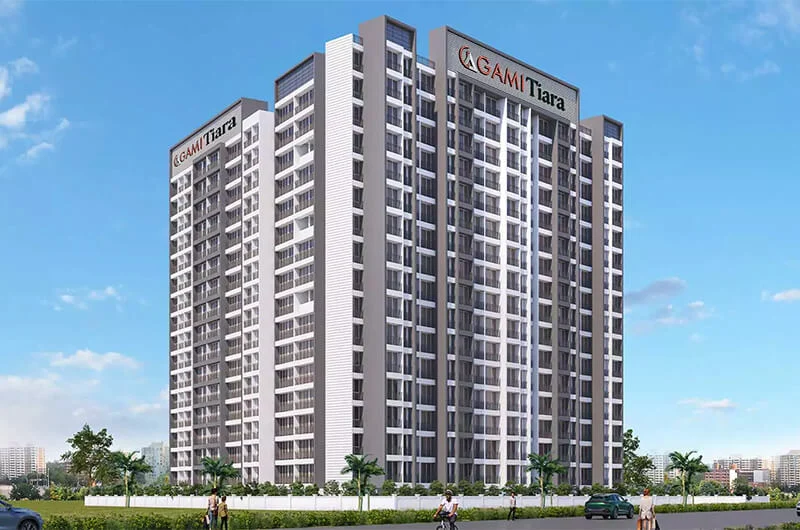
- Pisarve and Taloja Panchanand — the busiest value-housing cluster, with Gami Nirvana, Gami Teesta and Gami Tiara.
- The Pendhar metro side in Phase 2 — Geetanjali Bellezza and Dedrani One Valencia.
- Koyana Velhe and Ghotkamp — the developing edge, with Arihant Anaika and Mahaavir Amber.
- Navde and the highway-junction side — Laxmi Prestige, with slightly better road logic than the deeper pockets.
- The Phase 1 versus Phase 2 comparison covers how those two halves differ overall.
How should you choose between Taloja pockets?
By distance to the things you use daily and by position relative to the industrial belt, in that order. Everything else — amenity lists, elevations, brand names — matters far less in this node than either.
Pisarve gives you density of everyday services, the Pendhar side gives you transit, Koyana Velhe gives you the lowest entry price, and Navde gives you road access. Those are genuinely different propositions at similar prices.
Do the visit properly, and factor in the MIDC belt assessment, which varies meaningfully by pocket and is the single check most Taloja buyers skip.
Is Taloja worth buying into at all?
For budget-led buyers with a long horizon, yes — it remains one of the few genuinely affordable entries into Navi Mumbai with metro access attached, which is not a combination available elsewhere at this price.
The trade-offs are real and worth naming: industrial adjacency in parts of the node, social infrastructure that is still thinner than in the established nodes, and a resale market dominated by other budget buyers.
If those trade-offs are acceptable, the Taloja shelf and the Taloja investment guide are the places to start. If they are not, the Upper Kharghar belt competes for the same budget on different terms.